
P17739069725311759
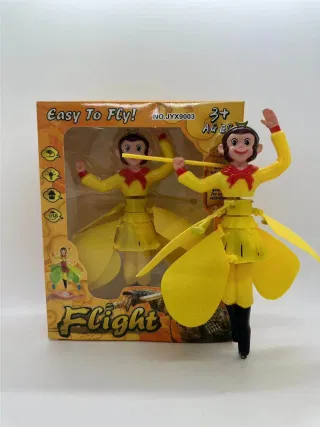
Alibaba Alternative for Toys
The four ways to buy toys from China — marketplace, agent, trading company, aggregator — and which one fits your volume.
Open prices per unit and per carton. No registration, no sales rep, minimum order total 2,000 CNY (≈ $313), no company required — you can buy as an individual. Both prices — per unit and per carton — are open before you order.
«Alibaba alternative» is usually searched by someone who has just hit one of three walls: the minimum order per model is too high, the price only appears after an enquiry form, or a shipment went wrong and it turned out nobody was actually responsible for it.
Those are three different problems, and they have different solutions. Before comparing suppliers, it's worth understanding the four sourcing models that exist — because the right answer depends on what you are buying and at what scale, not on which website has the friendlier homepage.
Below is how each one works, what it is genuinely good at, and where it fails. Including where we fail, because a comparison that only flatters the author is not a comparison.
The landscape
The B2B marketplace. A directory that connects you to thousands of suppliers. Enormous range, no stock of its own, no unified price. Each seller sets their own MOQ, their own terms and their own quality. You are effectively starting a new relationship with a stranger for every product.
The sourcing agent. A person or small firm in China who buys on your behalf. Genuinely valuable for custom manufacturing, factory audits and complex specifications. Paid as a percentage of your order, which means their incentive and your incentive on price are not identical, and the factory price is usually not something you see.
The trading company. Buys from factories, resells to you, holds margin inside the price. Simple and often reliable at volume, but the price structure is opaque by design and minimums are typically set for containers, not cartons.
The aggregator. Consolidates many factories into one catalogue with one checkout, one payment and one shipment. Range comes from the factories; accountability sits with the platform. This is our model, and its weaknesses are as specific as its strengths.
How to compare
Ignore the marketing and ask these.
Can you see the price before you talk to anyone? On a marketplace, sometimes. With an agent or trading company, rarely. With us, always — per unit and per carton, without registration.
What is the minimum, and which kind? Per model, per order value, or per shipment weight. A supplier can advertise «low MOQ» and still hold a $3,000 order minimum. Ours: from 1 carton per item; minimum order total 2,000 CNY (≈ $313).
Who is accountable when goods arrive broken? This is the question that separates a platform from a directory. On a directory, you and the seller sort it out. With us there is a written procedure: claims go to the seller, our manufacturing partner Yifeng Group, within 2 days of receipt, with photo or video showing the carton number and the item number. The acceptable defect rate is 2% of the batch; defects above it are compensated as agreed by both parties: replacement, refund or a discount on the next order. Refunds are paid within 14 days of the claim decision. Replacement shipping is at the seller’s expense.
Full buyer protection terms →How many separate payments and shipments will this become? Ten models from a directory can mean ten sellers, ten payments and ten parcels. The same ten models here is one order, one payment and one consignment.
Our model
The catalogue. 385,341 items from 5,233 factories in Shantou, Chenghai and Yiwu, sorted into 38 categories and 267 subcategories, with live counts. Not a directory of sellers — a single catalogue you can filter.
The prices. Two per item, per unit and per carton, published. Our own margin is one open parameter: currency conversion at the People's Bank of China rate plus 5%. You can verify it in a minute.
The consolidation. The batch is checked against your order by our partner Yifeng at its warehouse in Chenghai (Shantou); then the cartons from every factory are weighed and measured in Guangzhou and leave as one shipment with one set of documents.
The accountability. Inspection before loading and a claims procedure with stated deadlines: a claim within 2 days of receipt, a 2% defect tolerance, defects above it compensated as agreed, refunds within 14 days.
Honest limits
You need a product that does not exist yet. This catalogue sells what factories already produce. Putting your brand, your packaging or your own mould into production is a different road, and since 19.09 it has its own page: custom toy manufacturing through our factory partner. If what you need is a shape nobody has cut yet, start there, not here.
You buy one model by the container. At that scale a direct factory contract with a five-figure MOQ will beat our unit price. Range and flexibility are what we sell; being the floor price on a single high-volume SKU is not.
You need certification we don't have. 44,336 items hold at least one test certificate on file from the factory and the badge is visible before you order — but where a factory holds nothing, we say so instead of promising a document that will never arrive. If your market requires paperwork that item doesn't have, we will find an equivalent that does, or tell you we can't.
Documents, certification and customs →What changes
Ordering. Filter the catalogue, add cartons, see both prices, check out. No enquiry form, no three-day wait, no company registration number.
Paying. One payment for the goods, and freight invoiced separately once the consignment is assembled and weighed — never estimated up front, because until the cartons are on the scale nobody knows what they weigh.
Shipping. One consignment, DDP where available, with clearance and duties inside the rate. From $0.84/kg to Kazakhstan and $1.75/kg to Russia, minimum chargeable weight 100 kg; other destinations quoted on request.
Waiting. 30 days of free consolidation while you build volume, including goods you buy elsewhere.
Shipping methods and real transit times →The phrase
Every sourcing website on earth says direct from the factory. The phrase has been used so widely that it now carries almost no information, so here is what the four common arrangements actually look like from the buyer's side.
Genuinely direct. You hold an account with one manufacturer, you buy its production run, you pay it, and it ships to you. Real, and excellent — if you want that factory's narrow product line in that factory's quantities. One factory in Chenghai typically makes one category well and nothing else at all, so a genuinely direct relationship gives you a deep shelf in one place and an empty shelf everywhere else.
Direct through an agent. A person in China buys on your behalf. The value is real: language, inspection, presence. The cost is that the agent's margin is usually invisible, and so is the factory. When the same agent quotes you two prices six months apart, you cannot tell whether the factory moved or the agent did.
A marketplace listing. You are dealing with whoever paid for the listing. That may be a manufacturer, a trading company, or a reseller of a trading company. The platform is not a party to your transaction in the way buyers often assume, and the phrase "verified supplier" describes documents that were checked once, not goods that are checked every time.
An aggregator that holds stock. Many factories, one catalogue, one warehouse, one shipment. The margin is in the difference between buying at run scale and selling at carton scale, which is a margin you can reason about even without seeing the number.
We are the fourth. We are not the manufacturer and we do not describe ourselves as one — the goods are made by 5,233 different companies, and pretending otherwise would be the first dishonest sentence on this page. What we do is stand between those factories and a buyer who needs eleven cartons instead of one container.
Due diligence
Whoever you end up buying from, including us, these six questions separate a supplier who has thought about your business from one who has not. None of them are trick questions and all of them have a right answer.
Can I see the price before I talk to anybody? If the answer is no, budget a week for every comparison you want to make.
What exactly is the minimum, and what is it measured in? Pieces, cartons, order value or all three. Suppliers who quote only one of the three are usually hiding the other two.
When does the freight number exist? Before weighing it is an estimate, whatever it is called. Ask what happens when the estimate and the scale disagree.
What documents come with the goods by default, and what has to be requested? Commercial invoice and packing list should be automatic. Anything described vaguely at this stage will be described vaguely at customs too.
What happens if a carton is wrong, and how long do I have? A supplier with real claim windows will state them in days. A supplier without them will say "we will solve any problem", which is not a window.
Where does the exchange rate come from? A published reference rate plus a stated percentage can be checked by you at any time. An internal rate cannot be checked by anybody.
Our own answers, in order: yes; from 1 carton per item with a minimum order total of 2,000 CNY (≈ $313); after physical weighing; commercial invoice and packing list by default; claims to the seller, Yifeng Group, within 2 days of receipt, with photo or video showing the carton number and the item number, an acceptable defect rate of 2% of the batch, defects above it compensated as agreed by both parties — replacement, refund or a discount on the next order, refunds paid within 14 days of the claim decision, replacement shipping at the seller’s expense; and the People's Bank of China reference rate plus 5 %.
How to compare
Most sourcing comparisons are decided by whichever website was easiest to read, because the numbers being compared were never the same kind of number. Four rules make the exercise honest, and they apply to us exactly as much as to anyone else.
Compare landed, never ex-works. An ex-works price is the goods standing on a factory floor: no inland transport, no export paperwork, no consolidation, no international freight, no duty. On a light bulky toy the gap between that number and the landed one can exceed the price of the toy. Any comparison that mixes an ex-works quote from one supplier with a landed quote from another has already produced a wrong answer.
Compare at the same quantity. A price valid at ten thousand pieces is not evidence about a price at one carton. If a supplier will not quote at the quantity you would actually buy, you have learned something useful, but you have not learned a price.
Count the time. Three days of waiting for a quote, twice, is a week gone before anyone has shipped anything. On a fast-moving category that week is the whole opportunity. Published prices are worth a real amount of money and almost never appear in a comparison table.
Count the failure cases, not just the success case. Every supplier looks identical when nothing goes wrong. What separates them is the wrong carton, the short shipment, the model that turns out to be a different product than the photo. Ask each candidate what the window is and what evidence they need, before you order, and compare those answers with the same seriousness as the prices.
Applied to us, that comparison has an obvious shape. We will lose on unit price against a factory quoting a container of a single model, because a container of one model is cheaper per unit than a carton of twenty — that is arithmetic and no amount of arguing changes it. We will win when the assortment matters, when the quantity is small, when the price needs to be visible before a conversation, and when the goods come from more suppliers than one shipment could otherwise carry. If your situation is the first one, buy the container. If it is the second, this is what we built.
In practice
Buyers stay with a bad arrangement far longer than the economics justify, and the reason is almost never loyalty. It is that switching feels like an unknown, so here is the shape of it, honestly described.
You do not switch, you overlap. Nobody sensible moves an entire shelf at once. The realistic move is one shipment in parallel with your existing supply, sized to the freight floor, built from models you already know sell. It costs one shipment to find out whether the new arrangement holds.
The comparison you get is real, because the variables are controlled. Same models, same season, same shop. Landed cost against landed cost, transit against transit, and — the part most people forget to test — what happened when something went wrong.
The switching cost is mostly record-keeping. New SKUs, new carton counts, new piece counts per box. A morning of work, not a project.
What you keep from the old supplier is optional. Plenty of buyers end up with two sources permanently: a factory relationship for the two or three models they sell by the container, and an aggregator for the long tail and for testing. Those two arrangements do not compete, they cover different problems, and running both is usually cheaper than forcing either one to do the other's job.
The one thing worth doing before any of it is checking the calendar. Ordering into Chinese New Year or into Golden Week guarantees a bad first impression of a supplier who did nothing wrong — the factories are closed, and no arrangement survives that.

































FAQ
More wholesale pages
Tell us what you need and we come back with a quote — contact us →