
P17497986822653610
Import Holds
Paperwork rarely fails by being absent. It fails by being the wrong market, the wrong name, or the wrong year.
Open prices per unit and per carton. No registration, no sales rep, minimum order total 2,000 CNY (≈ $313), no company required — you can buy as an individual. Both prices — per unit and per carton — are open before you order.
We went through the dates on 42,045 factory test reports in our own catalogue, and one number is worth the whole article.
CPSC made ASTM F963-23 the mandatory standard for toys manufactured after 20 April 2024. Of the 24,034 items in our catalogue carrying an American test report, 8,471 were tested before that date — against the previous revision of the standard.
That is 35%. Those items are not fakes and the reports are not forgeries. They are simply reports about an older rulebook, and a buyer who sees the words «ASTM F963 tested» has no way of knowing which rulebook without looking at the date.
What this article answers:
Each one counted
Every one of these is measured on our own catalogue, not estimated.
| The gap | What it looks like | Items |
|---|---|---|
| Wrong market | EN71 on file, no ASTM F963 — documented for Europe, undocumented for America | 14,790 |
| Wrong year | ASTM F963 report written before 20 April 2024, against the previous revision | 8,471 |
| Tested, undeclared | ASTM F963 report on file, no Children’s Product Certificate | 6,514 |
| Label incomplete | Tracking-label documentation on file at all | only 6,078 |
Notice what is not on this list: forgery. The overwhelming majority of toy paperwork problems are ordinary mismatches — a real report about the wrong country, a real report from the wrong year, a real test that nobody turned into a certificate. Each is cheap to fix before production and expensive to discover at a port.
The gap people miss
Standards are revised, and when a revision becomes mandatory the older reports do not become fraudulent — they become insufficient.
CPSC states it plainly: 16 C.F.R. § 1250.2 identifies the Commission-accepted version of ASTM F963 that is mandatory, and toys manufactured after 20 April 2024 must meet ASTM F963-23. Note that the trigger is the manufacturing date of the toy, not the date of the test. A 2022 report describes a toy tested against F963-17; it says nothing about whether goods produced this month meet F963-23.
We measured how old our reports are. Across all 42,045 items with a readable date, the median age of the newest report on file is 2.3 years. A third — 34% — have nothing newer than three years old. And 2,346 certificate records carry no readable date at all, which for this purpose is the same as not knowing.
This is the single easiest question to ask and the one almost nobody asks: which revision was this tested against, and on what date?
Both, not either
Under 15 U.S.C. § 2063(a)(5) children’s products carry permanent tracking markings, and CPSC is explicit that they belong on the product and its packaging.
In practice this is where a factory’s habits and an importer’s obligations diverge. Printing a batch code on a carton is routine; moulding or printing one onto every piece inside is a production decision that has to be made before the run. Discovering the difference after the container has sailed means relabelling at a bonded warehouse, and that cost lands on the importer.
Only 6,078 items in our catalogue have tracking-label documentation on file. For everything else it is a conversation to have with the factory while the goods are still a plan.
Practical
Not «do you have certificates», which invites a yes and a PDF. These:
And one you answer yourself rather than asking: the Children’s Product Certificate is issued by the importer, not the factory. If you bring the goods in, it is yours to write — the detail is in our article on shipping toys from China to the United States.
About us
OPTTOYSCHINA is a wholesale platform operated by OPTTOYSCHINA LLP, Kazakhstan: catalog, requests and product selection. The seller — invoice, payment, export, documents and claims — is our manufacturing partner Yifeng Group, China. The catalogue holds 385,341 items from 5,233 factories, with the price published per piece and per carton, the carton quantity and the box dimensions stated, and the maker named on every card. The minimum is one factory carton of one model; minimum order total 2,000 CNY (≈ $313).
Our manufacturing partner is Yifeng Group (艺丰集团) in Chenghai, Shantou. The group has worked in Chenghai since 1992; its first plant, Shifeng Culture Development Co., Ltd, dates from that year and runs more than 35,000 m² of production area with an annual output of USD 60 M. AJT Testing Services Limited, founded in 2007, is historically linked with the group’s founding family and works in the same Chenghai ecosystem; the group keeps a permanent 15,000 m² showroom in Shantou with more than 500,000 toy samples. See our factory partner page.
Every batch is checked line by line with photo and video before the cartons are taped, and transit ranges are published for 62 destinations.
Honestly
We are not describing how customs works. We have no data on why any particular consignment is stopped, and we are not going to invent an agency’s procedure to make an article sound authoritative. What we have is the paperwork on our own shelves, counted, and the regulator’s published requirements, quoted.
A date is not a verdict. A report from 2022 is not automatically useless — it depends on when the goods were manufactured and what the toy is. It is a question to raise, not a conclusion to draw. We flag the date; the judgement is yours, and for anything consequential it belongs with a customs broker or a lawyer.
And our records have no expiry field. Certificates in our data carry an issue date and nothing else, which is precisely why this article is about dates rather than validity. We write «test certificate on file from the factory» and never «valid certificate», because the second would be a claim we cannot support.


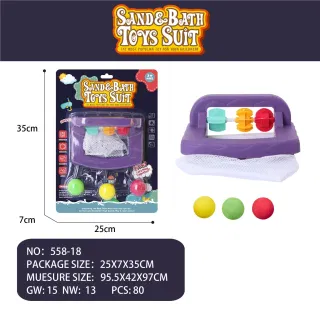
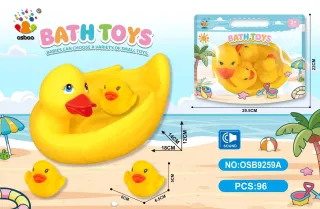
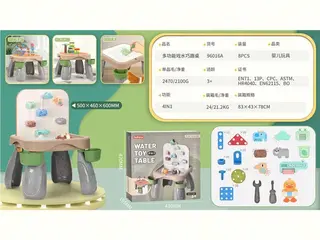
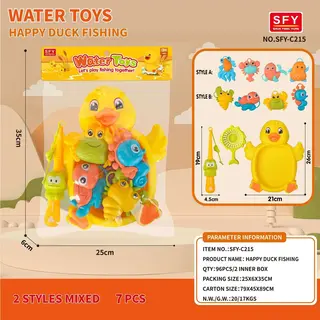







Counts are pulled live from the catalogue on every page load — not a fixed figure typed in by hand.
FAQ
More wholesale pages
Tell us what you need and we come back with a quote — contact us →