
P17463368173273418
Who Makes Your Toys
The median factory in our register supplies 39 products. The ten largest, together, account for 2%.
Open prices per unit and per carton. No registration, no sales rep, minimum order total 2,000 CNY (≈ $313), no company required — you can buy as an individual. Both prices — per unit and per carton — are open before you order.
If you have pictured a Chinese toy factory, you have probably pictured a hall. Long conveyor, hundreds of workers in matching caps, pallets of identical boxes going out one end. It is the image that comes with the phrase, and news footage keeps it alive.
For most of what reaches a toy shop, that image is wrong. We can say so with a number rather than an opinion, because we keep a register of the factories our own goods come from, and today it holds 5,231 of them with products in the catalogue.
The median factory in that register supplies 39 products. Three hundred and fifty-eight of them supply exactly one. And the ten largest, added together, account for two per cent of the catalogue.
What this article answers:
Measured
Here is the shape of our register, counted this morning. 5,231 factories have at least one product in the catalogue. The median supplies 39 products. Nine in ten supply 140 or fewer. The single largest supplies 1,287 — and that one is an outlier by a wide margin.
Now the part that surprised us when we ran it. Take the ten biggest suppliers in the register, add all their products together, and you get 6,210 items. The catalogue holds 305,519 items whose maker our register records. So the ten largest factories we buy from account for two per cent of what we sell.
Push down the list and the tail keeps going. Fifteen per cent of these factories supply three products or fewer. Seven per cent — 358 companies — supply exactly one. One product is their entire presence in a catalogue of nearly four hundred thousand.
That is not a catalogue assembled from a few industrial giants. It is a catalogue assembled from a very large number of very small makers, and the arithmetic of the trade follows from that fact rather than from anyone’s strategy.
The reason
So why are they small? Because of what a toy factory actually owns.
The asset is a steel mould, and a mould makes one shape. A workshop that owns two tools has two products. Adding a third product is not a matter of effort or ambition — it is tens of thousands of yuan of new steel, cut by a specialist, before a single piece has been sold. That is why a small maker stays small in range even after twenty profitable years: the range is capital, not enthusiasm.
What makes the model work is that nothing else has to be owned. Within a few kilometres of the workshop sit the resin suppliers, the mould makers, the pad printers, the electroplating shops, the packaging plants, the testing laboratories and the freight consolidators. A workshop rents all of it by the job. Its own walls need to contain machines, staff and the two moulds.
One more figure worth having in mind, and it is not ours: according to reporting by the Hong Kong outlet HK01 in January 2024, Chenghai accounts for about 33% of the world’s toy production capacity, with more than six million toys leaving the district every day, more than 50,000 toy businesses registered there and over 125,000 people employed in the trade. We cannot verify those numbers ourselves — we cite them with their source and date rather than as our own measurement — but they put the scale of a single district into perspective.
Read that way, the cluster is not a place where factories happen to be near each other. It is a single factory whose departments happen to have separate owners — and the individual workshop is a department, which is exactly the size it should be.
For a buyer
This is where the distribution stops being trivia and starts costing money.
If the median maker has 39 products and nine in ten have fewer than 140, then a company presenting you a catalogue of five hundred items is not manufacturing them. It is aggregating — buying from workshops and reselling. Five hundred products would mean five hundred moulds, and nobody in our register is close.
Aggregating is a legitimate and necessary business. It is ours. The problem is only when it is described as manufacturing, because the description changes what you believe about price and about who fixes a defect. A workshop quotes from its own cost. A reseller quotes from a workshop’s price plus a margin, and the margin is invisible if the workshop is invisible.
Which is the practical reason our cards name the factory on all 385,341 items. Not as a gesture of openness — because a named maker can be reordered from and an unnamed one cannot, and because a buyer who can see the distinction can judge the price.
A correction
It would be convenient to end with «so buy from big factories». The data does not support it and neither does experience.
A workshop that has made the same pull-back car for fifteen years often makes it better than a large plant running it as a minor line. What size does predict is different: a small maker has less slack for a rush order, a higher relative cost for a colour change, and more exposure to one bad season.
What actually predicts whether a toy meets a standard is whether anybody tested that model. Across our catalogue, 44,336 items of 385,341 carry at least one test certificate on file from the factory — 11.5% — and the product card shows which standards, or shows an empty field when nothing was supplied. That number is far more useful than the size of the company behind it.
About us
OPTTOYSCHINA is a wholesale platform operated by OPTTOYSCHINA LLP, Kazakhstan: catalog, requests and product selection. The seller — invoice, payment, export, documents and claims — is our manufacturing partner Yifeng Group, China. The catalogue holds 385,341 items from 5,233 factory names, with the price published per piece and per carton, the carton quantity stated and the maker named on every card. The minimum is one factory carton of one model; minimum order total 2,000 CNY (≈ $313).
Our manufacturing partner is Yifeng Group (艺丰集团) in Chenghai, Shantou. The group has worked in Chenghai since 1992; its first plant, Shifeng Culture Development Co., Ltd, dates from that year and runs more than 35,000 m² of production area with an annual output of USD 60 M. AJT Testing Services Limited, founded in 2007 — the first private laboratory in eastern Guangdong to hold the Chinese national CCC accreditation for toy testing — is historically linked with the group’s founding family and works in the same Chenghai ecosystem; the group keeps a permanent 15,000 m² showroom in Shantou with more than 500,000 toy samples. See our factory partner page.
We have offices in Yiwu and Shantou and a consolidation warehouse in Guangzhou. Every batch is checked line by line with photo and video before the cartons are taped, and transit ranges are published for 62 destinations.
Honestly
Three limits, because a number without its edges is a slogan.
First, this is our register, not China. We can describe 5,231 factories we buy from. We cannot tell you how many exist, and anyone who quotes you a national total is quoting an estimate.
Second, 305,519 of our 385,341 catalogue items — 79% — have a maker recorded in the register. The remaining fifth are listed without that link, so every share above is calculated on the 79% we can attribute, not on the whole.
Third, the register needs cleaning: 184 factory names appear on more than one record, which is why the catalogue shows 5,233 distinct names against 5,233 register entries. We found this while preparing this article, and we are saying it here rather than publishing a rounder number. Merging those records changes page addresses, so it is being done carefully rather than quickly.
The distribution will also keep moving. Workshops appear, stop, buy a second mould. The 39 is today’s median, not a constant — and the reason we publish the method alongside it is so that the next count can be compared with this one.










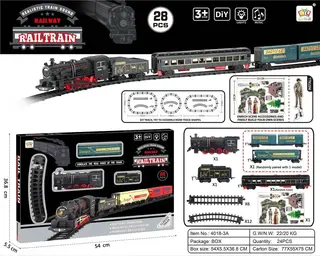
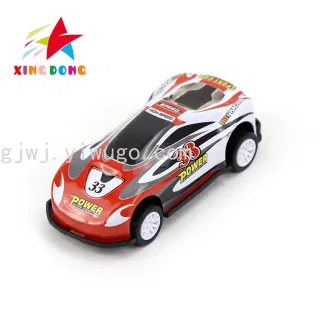
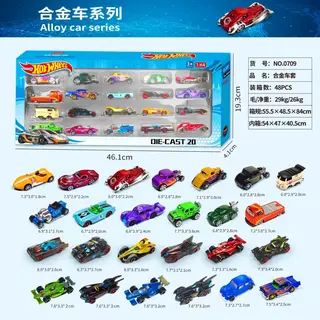



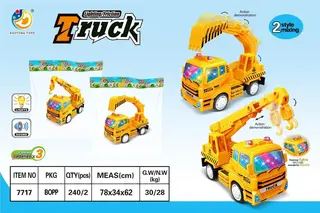
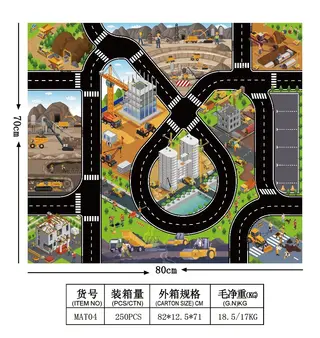
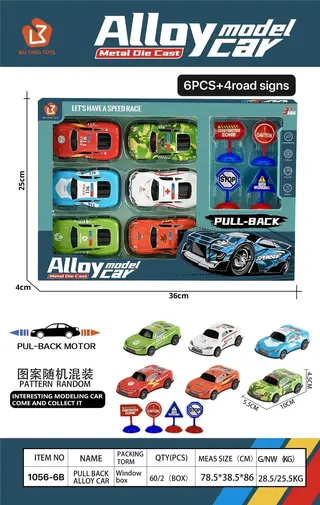
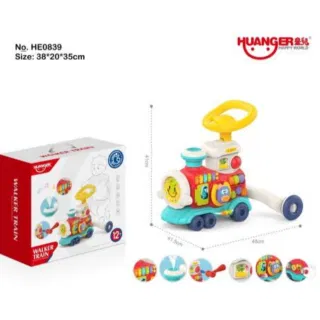

Counts are pulled live from the catalogue on every page load — not a fixed figure typed in by hand.
FAQ
More wholesale pages
Tell us what you need and we come back with a quote — contact us →