
P17668034217083325

New
A China Toy Supplier With a Low Minimum Order
From 1 carton per item; minimum order total 2,000 CNY (≈ $313) — mix models, reorder by the carton, keep your cash working.
Open prices per unit and per carton. No registration, no sales rep, minimum order total 2,000 CNY (≈ $313), no company required — you can buy as an individual. Both prices — per unit and per carton — are open before you order.
A high minimum order value is the quietest barrier in wholesale. It rarely appears in the headline; it appears in the reply from the sales manager, three days after you asked for a price.
It is also the barrier that hurts the businesses that can least afford it — a new marketplace seller, a shop with one location, a buyer entering a new category. Not because they can't sell the goods, but because a threshold forces them to buy in one shape when their cash flow needs another.
This page is about that: why thresholds exist, why ours is low — from 1 carton per item; minimum order total 2,000 CNY (≈ $313) — and how to run a supply chain on small, frequent orders.
Why
Almost never because of the goods. Nearly always because of the cost of serving you.
A traditional supplier assigns a salesperson to your account. That person answers questions, prepares quotes, chases the factory, resolves problems. The cost is the same whether your order is $300 or $30,000, so a threshold is a rational way to protect it.
Add customs paperwork prepared per shipment, a warehouse slot occupied per consignment, and a payment received per transaction — each with a fixed cost — and the $2,000 minimum stops looking arbitrary. It is a defensible response to a real problem.
We shrank the problem instead of charging you for it. There is no assigned salesperson because prices are published, both per unit and per carton, without registration or enquiry. There is no bespoke quote because the cart calculates freight from actual weight and volume. What is left is mostly automated, which is why our threshold is low: from 1 carton per item; minimum order total 2,000 CNY (≈ $313).
What changes
Testing without a bet. Buy one carton of twenty different models, see what sells, reorder the winners. The information costs a fraction of what a threshold-sized order would.
Replenishment at the real rhythm of your sales. When a model sells out you reorder by the carton, within an order total from 2,000 CNY (≈ $313), not $5,000 worth of assorted stock you didn't plan for.
Seasonal top-ups. Two weeks before the season, when you know exactly which lines are moving, you can add three cartons instead of waiting for the next big order.
Cash that stays in the business. A threshold doesn't only decide what you buy — it decides when your money comes back. Small, frequent orders turn stock over faster, which matters far more to a growing business than a slightly better unit price on a large one.
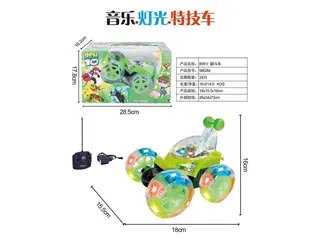
Entering a category you don't know. Building sets, plush, RC vehicles, party supplies — each behaves differently. With a low threshold you can learn a category with one carton instead of committing to it with ten.
Freight
A low order minimum does not remove physics. The genuine threshold in this business belongs to the carrier.
Consolidated DDP rates start at 100 kg. Below that, the shipment is billed either at a small-consignment rate or rounded up to 100 kg. Which means the practical question is never «what is the minimum order» — it is «what does this shipment weigh».
| Route | Rate | Min. chargeable weight |
|---|---|---|
| China → Kazakhstan | $0.84–2.04 /kg | 100 kg |
| China → Russia | $1.75–3.62 /kg | 100 kg |
| China → EU, US, Middle East | quoted on request | 100 kg |
100 kg to Almaty at the lower rate is $84 for the whole shipment. Thirty kilos costs about the same. So the money you save by ordering less is mostly not saved — it is spent on shipping air.
The correct use of a low minimum is not to ship tiny consignments. It is to decide freely what goes into a 100 kg shipment, instead of having a supplier decide it for you with a dollar threshold.
And when you can't fill it in one go: 30 days of free consolidation in Guangzhou, with goods from other suppliers welcome in the same box.
The hidden cost
A high minimum order value looks like a number on a page. In practice it changes four things about how a business runs, and none of them appear in the number itself.
It decides what you are allowed to learn. If the smallest thing you can buy is five thousand dollars of one supplier's goods, then every test costs five thousand dollars, and you will run very few tests. Businesses that can test cheaply learn faster than businesses that cannot, and over a year that gap is larger than any price difference.
It converts your shelf into a forecast. Above a threshold you are no longer buying what you know sells; you are buying what you predict will sell, months ahead, in quantities set by somebody else's factory. Every unsold unit of that prediction is money sitting in a box.
It hides the price until you are committed. Thresholds and enquiry forms travel together. You submit a form, wait, get a quote against a quantity you did not choose, and by the time you know the price you have already spent a week. Published prices and a low threshold are the same policy seen from two sides: both mean the number does not depend on how much you are willing to spend.
It filters out your best customers before you have them. A shop opening its first season, a seller testing a new marketplace category, an importer entering a country — none of them can meet a large threshold, and all of them become large buyers if they survive the first year.
Money shape
Small orders are not simply cheaper versions of large ones. They change the shape of the money, and that shape is usually the reason a small importer either grows or stalls.
Money returns before it goes out again. A large order ties capital up for the whole cycle — purchase, freight, transit, shelf, sale. A small order completes that loop faster, and the same capital can go around it several times a year. Two buyers with identical capital and different order sizes end the year with very different revenue, without either of them having been better at selling.
Mistakes stay small. Every buyer picks wrong sometimes. On a container the wrong pick is a year of storage. On a carton it is a lesson that cost the price of a carton.
Freight becomes the thing to optimise, not the order. Once the order total clears 2,000 CNY (≈ $313), the floor that matters is the 100 kg chargeable minimum on freight. That is a much friendlier constraint, because you control it by assortment rather than by capital: fill the floor with more models rather than more units of one.
Consolidation converts frequency into freight efficiency. Goods can wait in the warehouse for 30 days at no charge, so ordering three times in a month and shipping once gives you the cash-flow shape of small orders with the freight cost of one larger shipment. Used deliberately, that single mechanism removes most of the penalty small buyers normally pay.
What does not change. Goods are paid before purchase and freight after weighing, regardless of order size — there is no separate small-order surcharge and no worse exchange rate for buying less. The rate is the People's Bank of China reference plus 5 %, published, and it is the same rate on the smallest order as on the largest.
The mechanism
It is fair to ask why a threshold that is unavoidable for a manufacturer is avoidable for us, because if the answer were magic you would be right to be suspicious. It is not magic, it is a different position in the chain.
A factory's cost is dominated by the production run: machine setup, mould change, colour batch, packaging print. Those costs are the same whether the run serves one buyer or fifty, which is why a factory's price only makes sense at run scale, and why it has no way to say yes to three hundred pieces without losing money on them.
Our cost is dominated by handling: buying, receiving, checking, storing, picking, consolidating and shipping. Those costs scale with cartons rather than with runs. We meet the factory's threshold by aggregating many buyers into one purchase, and we meet your requirement by breaking that purchase into cartons. The margin lives in the gap between the two scales, and it is a margin you can reason about without being told the number.
That also explains the two limits we cannot remove. We cannot go below one carton, because the carton is the factory's own sealed unit and breaking it destroys both the packing protection and the claim traceability. And we cannot go below the carrier's 100 kg chargeable minimum, because that floor belongs to the carrier and not to us. Between those limits sits one more that we chose and state openly — a minimum order total of 2,000 CNY (≈ $313); piece count, registration and a sales conversation are constraints we chose not to have.
Money
Small orders are where hidden costs do the most damage, because a fixed fee that is invisible on $20,000 is painful on $600. So here is every line of your invoice.
Goods, at the published price — per unit and per carton, both visible before you order.
Currency conversion, at the official People's Bank of China rate plus 5%, fixed on the day you pay. Not an «internal rate»: open the PBOC site, add five percent, and you have the exact figure your order is calculated at.
Your bank's transfer fee. International charges sit with the sender — SWIFT type OUR — so the full invoice amount reaches us. On a small order this is the line most worth checking with your bank before you send.
Freight, invoiced separately after your consignment is assembled, weighed and measured. Never estimated in advance, because until the cartons are on the scale nobody knows.
There is no transaction commission, no sourcing fee and no handling invoice — which is precisely what makes an order at the 2,000 CNY minimum viable at all.
How your final invoice is built →Fit
It suits you if you are launching a shop or a marketplace account, testing categories, running a narrow niche where one carton is a month of sales, restocking bestsellers frequently, or buying for several small outlets with different mixes.
It suits you less if you need one model in container quantities at the absolute floor price. At that scale a direct factory contract with a five-figure MOQ will beat us on unit price, and we'll say so rather than pretend otherwise. Our advantage is range, speed and a low threshold — not being the cheapest possible source for a single high-volume SKU.






















FAQ
More wholesale pages
Tell us what you need and we come back with a quote — contact us →