
P17539580858845104
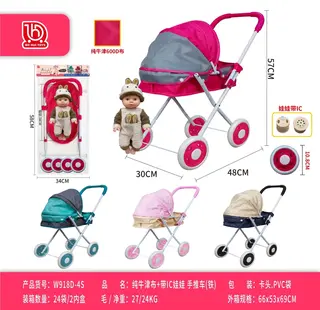
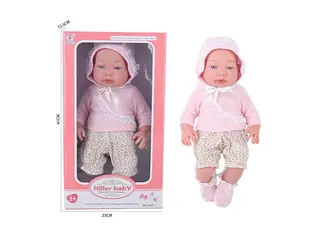
Wholesale Doll Toys, Fabric Red 57cm
5.87 $/ pc
Three layers of support: transparent certification tagging, door-to-door DDP, and official Chinese export clearance for direct importers.


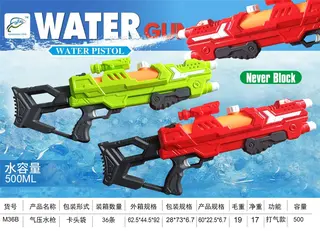
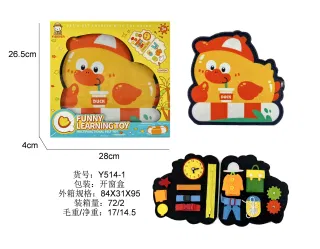
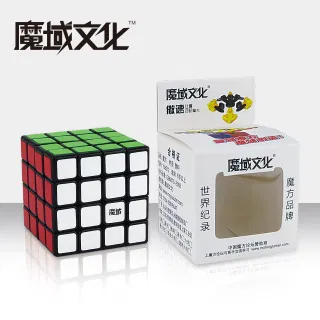














In the international toy trade, compliance is your ticket to the market. So this is where we tell you the inconvenient truth instead of the convenient one.
We will not promise a European CE certificate for an unbranded low-cost toy. That promise falls apart at your first shop inspection or your first marketplace takedown, and you pay for it, not us.
Instead of promises we run a transparent system. You see what documents exist for an item before it goes in your cart. You decide what fits your market and your sales channel — and we are accountable for one thing: that what the product page says is true.
We don’t start negotiating with factories after you place an order. That work is already done: whatever the manufacturer gave us is displayed on the item itself.
If the manufacturer holds valid testing — EN71 and CE for the EU, CPSIA and CPC for the US, TR CU for the EAEU — the product carries a badge marked “certificates provided by the manufacturer.” We send the scanned lab report on request.
If there is no badge, the factory makes that item for the Chinese domestic market or without certification. We do not write “certificate pending” and we do not attach someone else’s report from a similar item. No means no.
If there is no badge and you need one, tell us before you order. We go to the factory and establish three things: whether testing exists that wasn’t passed to us, whether they will run it for your volume, and what it costs in money and time. Sometimes the answer is that the factory simply doesn’t do it — then we say so and find you an equivalent from the catalogue that does have the paperwork.
We counted, and we publish the number instead of an adjective.
25,572 catalogue items hold at least one valid certificate. Not “many of our products are certified” — an exact, live figure. By test type:
| Document | Items | Market |
|---|---|---|
| REACH (phthalates) | 17,648 | EU |
| EN71 | 14,250 | EU, UK |
| CPSIA / HR4040 | 12,940 | US |
| ASTM F963 | 12,768 | US |
| CE | 9,401 | EU |
| CPC | 9,185 | US, Amazon |
| REACH PAH | 8,780 | EU |
| UKCA | 3,419 | UK |
| RoHS | 2,367 | EU |
An item can hold several documents at once, so the rows add up to more than 25,572.
Why we’re this blunt. A buyer who once received a fabricated certificate from a supplier never comes back. A buyer who was told “this item has no paperwork, take that one instead” comes back every time.
By default, with no request needed, every shipment includes:
That is what you need to receive and reconcile the consignment. Everything else — lab reports, manufacturer certificates — is sent on request for the items where the factory holds them.
For most destinations — the US, the EU, the Middle East and the CIS — DDP (Delivered Duty Paid) door-to-door shipping is available.
How it works. The freight forwarder handles Chinese export clearance, international freight, customs clearance in your country and all import duties. It is already inside the rate you see at checkout.
What it means for you. The goods arrive at your warehouse. You don’t file declarations, hire a broker, or explain anything to a customs officer — the forwarder clears the goods through its own importer network.
Where the line sits. DDP covers getting the goods into the country. It does not replace the documents you need to sell the goods in your shop or on a marketplace — those are different things, and this is exactly where buyers get caught. Almost anything can be imported. Selling on Amazon without a CPC, or in EU retail without CE, cannot be done. That is why you should read the certification badge on the product page even when you ship DDP.
If you are a large importer, clear customs yourself and need proper documentation for your books, DDP is the wrong route for you. The second route exists for exactly this.
We provide full export compliance on the Chinese side. If the manufacturing factory holds no export licence — common with producers focused on the domestic Chinese market — it is not a hurdle. We, or our fully licensed partners, act as the Exporter of Record: we handle the Chinese export declaration and hand your nominated carrier the complete document set required for legal export.
Why this matters more than it looks. A factory without an export licence is the quiet reason half of all “buying direct from the factory” ends up as a grey shipment: the goods move, but no document ever reaches your accounts. We close precisely that gap — you buy from a domestic-market producer and still get a clean, documented export.
Not legal advice — a starting point. Requirements change, and your broker and your sales platform always have the final word.
| Market | Typically required to sell | Items we hold |
|---|---|---|
| United States | CPSIA, CPC certificate, ASTM F963, tracking label | CPSIA 12,940 · CPC 9,185 · ASTM F963 12,768 |
| European Union | CE marking, EN71, REACH, Declaration of Conformity | EN71 14,250 · CE 9,401 · REACH 17,648 |
| United Kingdom | UKCA marking, toy rules close to the EU | UKCA 3,419 · EN71 14,250 |
| EAEU — RU, KZ, BY, AM, KG | TR CU 008/2011 for children’s products | check the badge on the product page |
| UAE and the Gulf | GSO requirements, conformity marking | confirm with your broker; reports on request |
If the exact item you want has no paperwork, ask us — we’ll find an equivalent among 386,893 products. With 5,233 factories in the catalogue, the odds of a certified lookalike are good.
Certification is the area where buyers are most often misled, usually without anybody lying outright. Four distinctions do most of the work.
A certificate belongs to a product, not to a factory. A workshop that holds test reports for three of its models does not thereby cover the other forty. When a supplier says "our factory is EN71 certified", the correct next question is which specific items, and to see the report with the model on it.
A test report is not a declaration, and neither is a mark. A laboratory report records what was tested and what the result was. A declaration of conformity is the manufacturer's own statement. A mark printed on a box is neither — it is printing. All three have their place and they are not interchangeable.
Standards are not global. EN71 is a European standard, ASTM F963 an American one, and holding the first does not satisfy the second. REACH concerns chemical content and says nothing about mechanical safety. Buying for two markets can mean needing two sets of documents for the same toy.
Documents expire and products change. A report from several years ago, covering a version of the product with a different component, is a document about something else.
Across our catalogue, 25,572 items carry at least one valid factory-supplied certificate: REACH on 17,648, EN71 on 14,250, CPSIA on 12,940, ASTM F963 on 12,768, CE on 9,401, CPC on 9,185, UKCA on 3,419 and RoHS on 2,367. Those numbers are counts of items with documents, not a claim that the rest are unsafe — they are a claim that the rest arrived without paperwork, and we show that as it is.
The packing list is the least glamorous document in the shipment and the one that settles the most disputes. It is worth five minutes on arrival.
Line count against order. Every model you ordered should appear as its own line. A missing line is a shortage that can be raised immediately, before the goods are dispersed into a warehouse.
Carton count per line. Two cartons of a model on the list and one on the pallet is a discrepancy with a paper trail, which is the easiest kind to resolve.
Gross and net weight. The gap between them is packaging. A gross weight far above expectation on light goods usually means bigger boxes than assumed, which is a freight cost you will meet again on the next order.
Dimensions per carton. These are what the volumetric calculation was run on. If you ever want to check a freight bill, this is where you start.
Marks and numbers. How cartons are identified on the outside. This is what lets a partial delivery be reconciled without opening anything.
A commercial invoice and a packing list ship with every consignment by default. Anything else your market requires is worth naming before the goods move rather than after, because a document requested while cargo sits at a border costs far more than the same document requested at order time.
Customs problems are almost always scheduling problems in disguise: the right document existed, it just was not asked for early enough. Four things to settle at order time.
Which entity is the importer. The name on the declaration carries the responsibility, the classification and the duty. If it is not yet registered, the shipment waits.
Which classification codes apply. Codes drive duty rates, and duty is often larger than the freight. Guessing at this stage is expensive.
Whether anything in the assortment sits outside the plain-toy regime. Batteries, radio transmitters, screens and sound modules commonly attract additional requirements. Two or three items in a mixed order can carry the whole shipment's paperwork burden.
Who is doing the clearing. Under a DDP arrangement it is not you, and that is the point of it. Where you clear the goods yourself, everything above becomes your work, and it is better to know that at the moment of ordering.
There are two ways your goods can cross a border, and neither is universally better. What follows is the trade-off as it actually is.
Under DDP the shipment arrives cleared, with duty and clearing handled before it reaches you. You get one number and one counterparty, no broker relationship to build, and no exposure to a classification argument you are not equipped to have. The cost is that the components are bundled: you see a delivered price rather than freight plus duty plus clearing as separate lines, and bundled numbers are harder to optimise.
Clearing it yourself is the opposite. You see every component, you can challenge a classification, you can use your own broker and your own duty treatment, and at volume that transparency is worth real money. The cost is that you now own the process: the codes, the paperwork, the timing, and the consequences of getting any of it wrong while goods sit at a border accruing storage.
A reasonable rule of thumb. Early on, when shipments are small and the learning curve is the expensive part, DDP is usually the better trade. Once volumes are regular and your assortment has settled into predictable classifications, self clearing usually wins. Many established importers run both — DDP for test orders and mixed assortments, self-clearing for the repeat lines they know cold.
What does not change either way. A commercial invoice and packing list ship with every consignment, the certificates shown on a product page are the ones the factory supplied, and neither arrangement makes an unlicensed or uncertified product importable.
Four recurring situations account for most of the documentation problems that reach us, and all four are avoidable at order time.
Assuming one certificate covers a category. A test report belongs to a model. Ordering nine related items because one of them showed a certificate is a common and expensive mistake.
Discovering an electrical requirement late. Anything with a battery, a motor, a speaker or a transmitter can sit under a different regime from a plain toy. Two such items in a mixed order can carry the paperwork burden for the whole shipment.
Under-declaring to reduce duty. It is offered often enough that it deserves a direct answer: no. The exposure sits with the importer of record, the savings are small, and the consequences when it is noticed are not.
Leaving the classification to the last moment. Codes drive duty, and duty is frequently larger than the freight. Working them out while goods sit at a border costs storage on top of everything else.
FAQ