B2B·Wholesale Marketplace

Buy Direct from Manufacturer

Buying Toys Direct from the Manufacturer — What You Gain and What It Costs

We are not a factory, and we will not pretend to be one. Here is the arithmetic.

385,341 items in stock 5,233 factories 1 carton minimum order $0.84/kg freight from

Open prices per unit and per carton. No registration, no sales rep, minimum order total 2,000 CNY (≈ $313), no company required — you can buy as an individual. Both prices — per unit and per carton — are open before you order.

Buying direct from the manufacturer means one factory, one minimum, one payment and one shipment — per factory. For a single product in volume that is the cheapest way to buy. For a shop that needs twenty models it means twenty of everything, and the freight alone usually erases the saving. We are not a factory. What we do publish is the factory name on every one of 385,341 product cards, so you always know who made the thing you are buying.

«Direct from the manufacturer» is good advice given badly. It is true that every layer between you and the mould costs money. It is also true that removing the layer moves the work to you, and the work is not small.

This page is the arithmetic rather than the slogan, and it ends with where we actually stand — which is not «we are the factory».

The first trap

Three Kinds of Company, All Called «Factory»

The mould owner. Paid for the steel tooling, runs the machines. The lowest price in the chain on their own items, and no flexibility on anything else — they make what the mould makes.

The assembler. Buys parts, puts them together, packs. Flexible on sets and packaging, but the components already carry someone else’s margin.

The trading company. Owns nothing, resells everything, replies fastest and in the best English. Genuinely useful, but the speed is what you are paying for.

All three will call themselves a factory, and none of them is lying by their own lights. One question separates them: which products do you own the mould for? The Shantou factory page goes through this in detail.

What direct costs

Twenty Models, Twenty of Everything

Going direct is one relationship per factory. For one product in volume that is simple and cheap. For a shop it multiplies.

Twenty models from twelve factories means twelve minimums to meet, twelve payments to send and clear, twelve cartons handed to freight separately, and twelve chances for something to be wrong after it has already left China. The per-piece price is better. The landed cost usually is not, and the time cost is not close.

This is the part the advice leaves out, and it is why most shops that try it once do not try it twice.

Plainly

We Are the Layer — and We Say So

We are not the factory. We buy from factories, bring goods from several of them into one shipment, and check the batch line by line with photo and video before the cartons are taped, because that is the last place a problem is cheap to fix.

What we refuse to do is hide the factory. The name is on every one of 385,341 product cards, which means a model that worked for you can be reordered from the same source, and it means you can go direct later if the volume justifies it. A seller who will not tell you who made it is selling you the not-knowing.

Our partner group in Chenghai does own production — three sites and its own engineering department; AJT, an ISO/IEC 17025 testing laboratory historically linked with the group’s founding family, works in the same Chenghai ecosystem. That is where private label actually gets made. It is a part of the catalogue, not the whole of it, and the cards say so.

Honestly

When You Should Go Direct

One product, large volume, repeating. If you sell thousands of one model every season, the factory is the right address and any layer is waste.

New geometry. If the shape itself has to be yours, a mould has to be cut, and that conversation belongs with the people who own the machines.

Everything else — breadth, seasonal ranges, a shop that needs twenty things and not twenty thousand of one — is where consolidation wins, and the numbers above are why.

How it works

One Carton per Model

Pick models in the catalogue, where the price is published per piece and per carton and the carton quantity is stated. We buy from the factories, consolidate, inspect in China, and ship to 72 destinations. Minimum order total 2,000 CNY (≈ $313), and we do not break cartons.

985087562
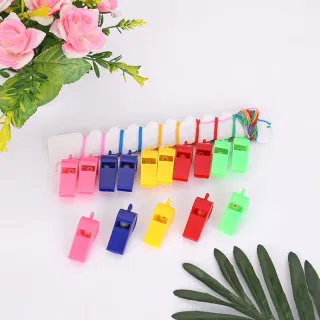
IG01 Plastic White
Wantong Dance Party Toys
IG01 Plastic White
0.02 USD/ pc
Min.20.00 pcs
Batch0.44 USD
P17654345972642346
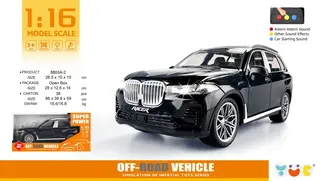
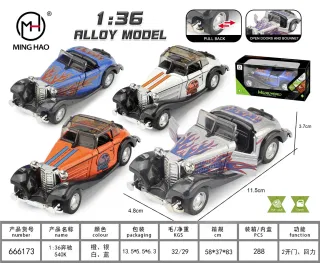
Car, Pull-Back Alloy
Chedu Model
Car, Pull-Back Alloy
1.66 USD/ pc
Min.192.00 pcs
Batch319.47 USD

Selected Categories, Live Counts

Counts are pulled live from the catalogue on every page load — not a fixed figure typed in by hand.

FAQ

Frequently Asked Questions

What are the largest toy factories?
The companies with the largest toy revenues are brand owners, not factories — they design, license and market, and the moulding happens elsewhere, usually in China. So the question as asked mixes two different businesses. If what you need is a large factory, the useful measure is not global revenue but how many items a maker actually has available: in our own catalogue the largest single factory supplies 1,287 items, and ten factories supply more than 400 each.
What is China's largest toy manufacturing site?
Chenghai District in Shantou, Guangdong, is officially designated «China Toys and Gifts City», and public figures put the district at more than 4,000 toy, gift and animation businesses. The most recent output figure we were able to verify is from 2013 — more than 31 billion yuan, about 70% of it export earnings — and we quote the year rather than present a thirteen-year-old number as current. Our own partner group is in Chenghai, and almost all 5,233 factories in our supplier register are recorded in Shantou.
How to locate toy manufacturers in China?
The clusters are known and they specialise: Chenghai in Shantou for plastic toys, Guangzhou for electronics and ride-ons, Yiwu for small goods and party items. Finding a name is the easy part; finding out whether that name owns a mould is the part that matters, and the question that separates them is simply which products they own the mould for. Our catalogue names the factory on all 385,341 items, which is the same information without the search.
Where can I find China toy manufacturers?
In the three clusters, and increasingly not in person at all. Our catalogue carries goods from 5,233 factories with the maker named on each product card, so the practical answer is that you can see who makes what before you contact anybody — and reorder from the same source later.
Who manufactures toys in China?
Three different kinds of company, all of which will call themselves a factory. Mould owners cut the steel tooling and run the machines. Assemblers buy components and put them together. Trading companies own nothing and resell everything, and answer fastest. Our cards name the actual maker of each item across 5,233 factories, which is the only way to tell them apart without asking.
Why should you choose a China toy factory?
Because that is where the moulds are — most of the world’s toys, including the ones sold under European and American brands, are moulded in a few Chinese industrial districts. The honest caveat is that choosing China does not choose quality for you: what differs between two toys from the same district is whether anyone tested that model. Across our catalogue 44,336 items of 385,341 carry a test certificate on file, and the card shows which.
What are toy manufacturers in China?
Three different kinds of company, and the word covers all three. Mould owners cut the steel tooling and run the machines. Assemblers buy components and put them together. Trading companies own nothing and resell everything. Our catalogue carries goods from 5,233 factories, and each product card names the one that made that item, which is the only way to tell them apart without asking.
Which companies manufacture toys in China?
We do not publish a list of other companies, because a list like that is a ranking and rankings are usually sold. What we do instead is name the factory on every one of our 385,341 product cards. That tells you exactly who made the thing you are looking at, which is more useful than somebody else's top ten.
Is buying direct from the factory cheaper?
Per piece, on one product, in volume — yes, clearly. Across an order of twenty models from different factories, usually not. Each factory sets its own minimum, takes its own payment and ships its own carton, so you pay freight and handling once per factory instead of once per order. The per-piece saving is real; the total is often worse.
Are you a factory?
No, and we will not say otherwise. We buy from factories, consolidate goods from several of them into one shipment, and inspect the batch in China before it travels. Our partner group in Chenghai does own production — three sites, an engineering department and a testing laboratory — but most of the 385,341 items in the catalogue are made by other factories, and each card says which one.
How do I know a supplier really is the manufacturer?
Three kinds of company will all introduce themselves as a factory. The mould owner paid for the steel tooling and runs the machines — lowest price on their own items, no flexibility on anything else. The assembler buys parts and puts them together — flexible, but someone else’s margin is already in the price. The trading company owns nothing, answers fastest and in the best English. Ask which products they own the mould for; the answer separates them immediately.
What is the minimum if I buy direct?
It is set by the factory and it is usually a production run, not a carton — often several thousand pieces of one model, because the line has to be set up. With us the minimum is one factory carton of one model; minimum order total 2,000 CNY (≈ $313). The median carton in our catalogue is 84 pieces.
Can I still get my own brand without going direct?
Yes, for most of what people mean by it. A printed box around a stock toy, colour within the factory palette, what goes in the set, pad printing and carton contents all change without a new mould. A mould is cut only when the shape itself has to be yours, and that is the one case where dealing with the factory directly genuinely matters.
How long does delivery take?
Production to order runs 15–30 days, up to 45 in peak season, then 3–5 days for consolidation and acceptance inspection in China. Freight after that depends on the lane: air 1–15 days, rail 12–25 where a rail link exists, sea 2–45. Ranges for the 62 destinations are published.
Do you provide certificates?
When the factory supplied them. Across the catalogue 44,336 items carry at least one test certificate on file from the factory — REACH on 33,088, EN71 on 36,137, CPSIA on 25,955, ASTM F963 on 24,034. Where a card shows nothing, nothing was supplied, and we would rather show an empty field than a borrowed report.

More wholesale pages

Tell us what you need and we come back with a quote — contact us →