
P16884588064583760
Which Toys Are Tested
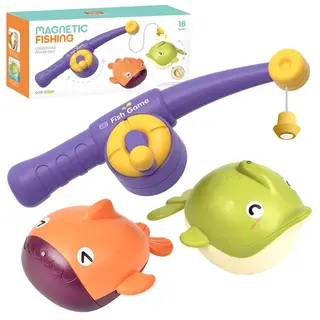
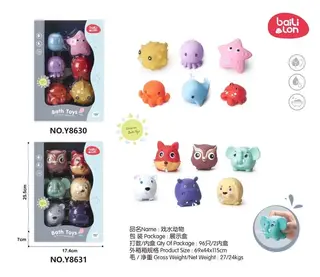
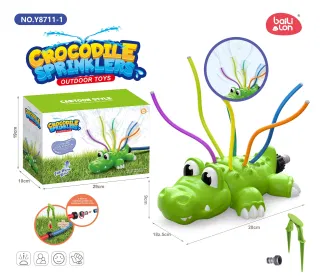
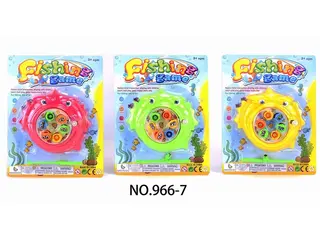
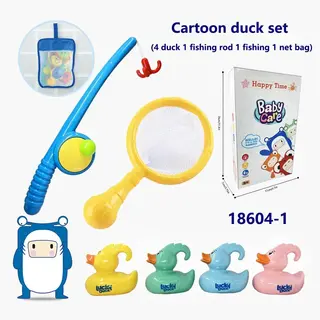
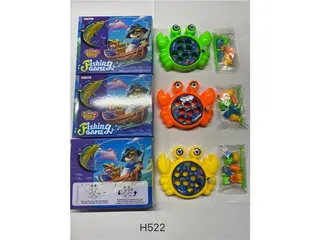
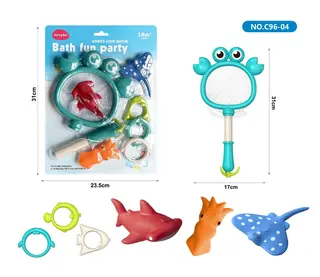
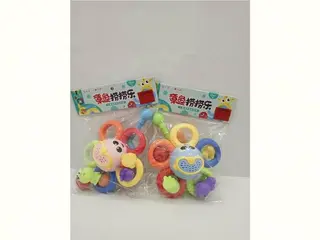
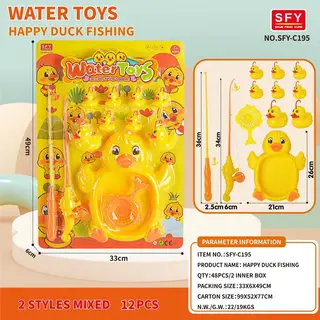
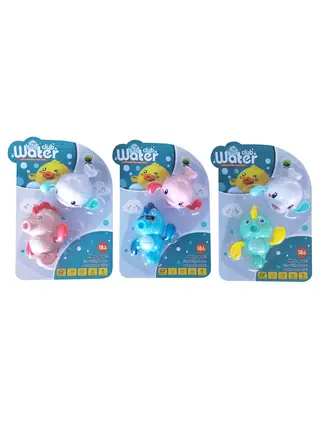
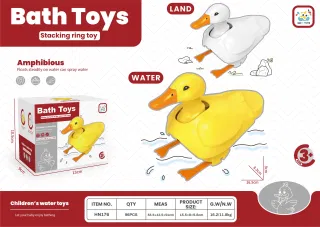
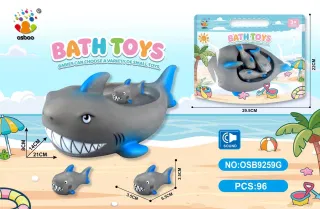
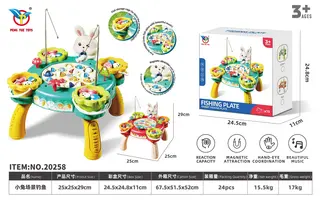
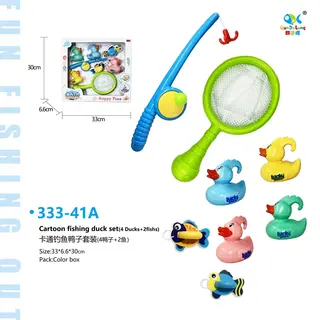
Bath toys: 28.9% carry a test certificate. Keychains: 0.7%. The gap is forty-fold, and it follows the child’s age.
Open prices per unit and per carton. No registration, no sales rep, minimum order total 2,000 CNY (≈ $313), no company required — you can buy as an individual. Both prices — per unit and per carton — are open before you order.
A toy shop owner asked us a reasonable question: are Chinese toys tested? We gave the honest average — 11.5% of our catalogue carries a test certificate from the factory — and realised the average is nearly useless to her, because she does not buy «the catalogue». She buys bath toys, or she buys party bags.
So we counted it by category. The answer is much more interesting than the average, and much more usable.
What this article answers:
See the items that carry a document — price, carton and factory on each →
Measured
Every category in our catalogue with at least five hundred items, ranked by the share carrying at least one test certificate on file from the factory:
| Category | Items | With a certificate |
|---|---|---|
| Bath toys | 3,378 | 28.9% |
| Baby activity | 1,108 | 28.1% |
| Soft books & tumblers | 854 | 25.9% |
| Rattles & teethers | 3,047 | 21.3% |
| Musical toys | 6,037 | 19.0% |
| Building sets | 29,238 | 17.2% |
| Role play sets | 26,278 | 16.3% |
| Board games & puzzles | 17,097 | 15.6% |
| Toy weapons & blasters | 34,807 | 15.1% |
| RC & powered vehicles | 28,004 | 15.1% |
| Night lights | 1,945 | 15.0% |
| Educational | 8,602 | 14.4% |
| Bubble toys | 9,065 | 13.6% |
| Cars & vehicles | 52,801 | 13.2% |
| Arts & crafts | 14,658 | 13.1% |
| Sporting goods | 10,533 | 11.4% |
| Dolls | 27,509 | 10.9% |
| Action figures & characters | 31,688 | 10.7% |
| Plush | 9,278 | 5.9% |
| Fidget & novelty | 17,361 | 6.1% |
| Costumes | 5,059 | 2.3% |
| Party decor | 2,869 | 1.1% |
| Balloons | 2,654 | 0.8% |
| Keychains | 12,026 | 0.7% |
| Stationery | 1,197 | 0.7% |
Bath toys carry documentation forty times as often as keychains. Both are made in the same district, often within a few streets of each other, sometimes by companies that know each other. The difference is not geography and not diligence.
The reason
Two forces push in the same direction, and together they explain the whole table.
The first is regulation. Rules concentrate on the youngest children, because a rattle goes in a mouth and a keychain goes on a bag. Buyers in those categories ask for documents as a matter of routine, importers refuse shipments without them, and the factory that wants that business keeps the reports current. Demand for paper creates paper.
The second is arithmetic, and it is the one nobody says out loud. A laboratory report costs roughly the same to produce for a ¥2 item as for a ¥20 one. On a bath toy sold by the thousand to buyers who insist on documentation, that cost is trivially recovered. On a keychain at ¥3.35, a full test can exceed the margin on an entire carton — and the buyer at the counter never asks.
So what the table really shows is not which toys are safe. It shows where somebody was willing to pay for finding out.
Read carefully
On 337,461 of our product cards the certificate field is empty. Here is exactly what that sentence carries.
It means: no test document was supplied to us for that item, so we have nothing to show and nothing to stand behind.
It does not mean the toy failed a test, because there was no test to fail. It does not mean the factory is careless — a workshop making a ¥2 novelty may build it to exactly the same specification as a tested one. And it does not mean the item cannot be sold, because that depends on your market and your channel, not on our field.
What it does mean practically: if a buyer, a marketplace or an inspector asks you for documentation on that item, you will not have it, and finding out at that moment is expensive. Which is why we show the field empty on the product page rather than at the point where you have already paid.
Practical
If certification matters for your market, there are only two honest routes, and both are ordinary.
Buy from the items that already carry it. 44,336 items do, and the card shows which standards — EN71 on 36,137, REACH on 33,088, ASTM F963 on 24,034, CPSIA on 25,955. In infant categories this is easy; in party categories it is genuinely hard, and that constraint is worth knowing before you plan the range rather than after.
Or commission testing on the specific model. It is arranged as part of a production order and priced per model, so it works at run volume and rarely on one carton. AJT, an ISO/IEC 17025 laboratory historically linked with our partner group’s founding family, works in the same Chenghai ecosystem, and that is where testing for our private-label work happens.
What does not work is hoping. A report attached to a factory rather than to a product number proves nothing about the product number, and a seller who offers one is offering decoration.
About us
OPTTOYSCHINA is a wholesale platform operated by OPTTOYSCHINA LLP, Kazakhstan: catalog, requests and product selection. The seller — invoice, payment, export, documents and claims — is our manufacturing partner Yifeng Group, China. The catalogue holds 385,341 items from 5,233 factory names, with the price published per piece and per carton, the carton quantity stated and the maker named on every card. The minimum is one factory carton of one model; minimum order total 2,000 CNY (≈ $313).
Our manufacturing partner is Yifeng Group (艺丰集团) in Chenghai, Shantou. The group has worked in Chenghai since 1992; its first plant, Shifeng Culture Development Co., Ltd, dates from that year and runs more than 35,000 m² of production area with an annual output of USD 60 M. AJT Testing Services Limited, founded in 2007 — the first private laboratory in eastern Guangdong to hold the Chinese national CCC accreditation for toy testing — is historically linked with the group’s founding family and works in the same Chenghai ecosystem; the group keeps a permanent 15,000 m² showroom in Shantou with more than 500,000 toy samples. See our factory partner page.
Every batch is checked line by line with photo and video before the cartons are taped, and transit ranges are published for 62 destinations. The full reasoning behind how we treat certificates is on our toy safety page.
Honestly
Three limits, because a table without its edges becomes a claim it cannot support.
This is our catalogue, not China. It describes what 5,233 factories supplied to us. A different buyer working with different factories would produce a different table, and we have no way to measure the national picture.
It counts documents, not testing. A factory may have tested a model and never sent us the report; in our data that item is indistinguishable from one that was never tested at all. So the true share of tested items is somewhere above 11.5%, and we cannot say how far above.
And it moves. Factories add certificates when a buyer demands them, and drop them when a report expires and nobody asks. The figures here were counted on 24 September 2026, and we publish the method alongside them so the next count can be compared rather than argued about.














Counts are pulled live from the catalogue on every page load — not a fixed figure typed in by hand.
FAQ
More wholesale pages
Tell us what you need and we come back with a quote — contact us →