
P17734668690085289

No red tape. Just common sense and unit economics.






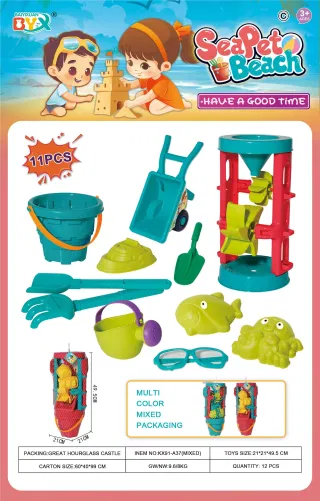

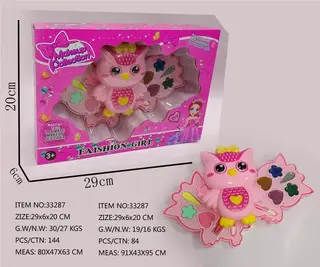

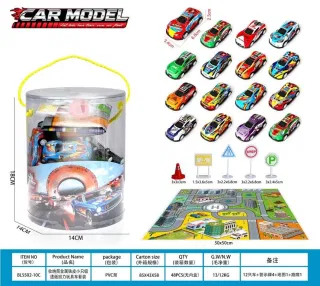
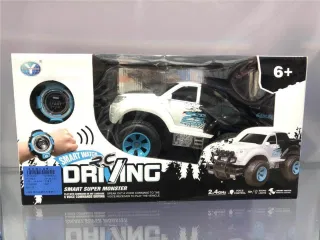



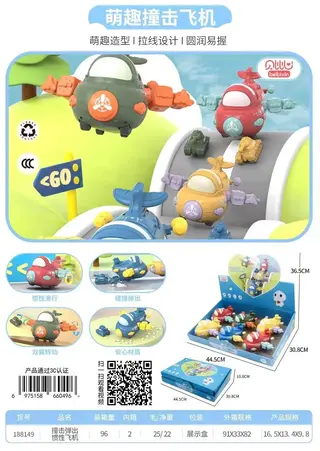
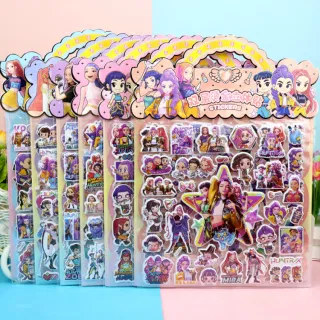



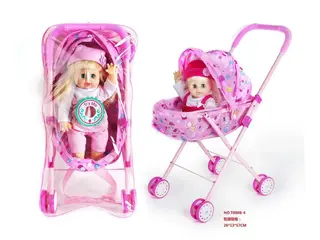



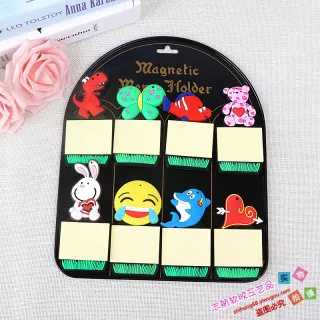











We built this platform to remove the barriers between Chinese factories and real businesses. We don’t care what you are on paper — a retail chain, a Shopify store owner, or an Amazon seller testing a new niche.
We care about one thing: that your purchase makes economic sense. So what follows isn’t a list of our restrictions. It’s the honest arithmetic of importing — including the part of it that might talk you out of ordering.
No. You can buy as an individual.
On DDP shipments the freight forwarder acts as importer of record and handles customs. We don’t ask for VAT numbers, registration certificates or incorporation documents. You pay for the goods, they arrive at your door.
If you are a company and clear customs yourself, the second route is open too: we provide official Chinese export clearance with the full document set. Both work — you choose.
There is no minimum order value. The only rule is one factory carton per item.
We don’t break cartons and we don’t sell loose pieces. That keeps the factory packaging intact: goods reach you exactly as they left the production line, shelf-ready.
Mix as many models as you like within a shipment. Twenty different items, one carton each — that’s a valid order.
We don’t ship single-piece samples and we don’t open factory cartons. The minimum unit is one sealed carton — including for a test order.
The reason is simple. Open a carton of twenty-four cars to pull one sample out, and the remaining twenty-three become dead stock: the carton is no longer factory-sealed and cannot be sold as new. We are a wholesale platform integrated with factories, not a retail shop window, and the cost of that service would ultimately be paid by every other buyer.
What this means in practice. Your test order is one carton. That is a normal product-launch investment, and it gives you more than a single sample would: you check the plastic, the seams, the packaging and the blister, you shoot photos and video for your listing — and the rest of the carton ships to FBA with your main order and sells. A single sample never sells.
If the product page says “assorted” or “mix colors”, you receive a sealed factory mix.
You cannot pick a specific colour or character, and nobody can guarantee the exact split inside the carton. That is how line packing works: whatever comes down the belt goes into the box. Factories aim for an even split — twelve pieces as three colours of four — but it can arrive as five, four and three. No one in China recounts colours inside a sealed shipping carton, and we won’t promise on their behalf that they do.
Factor this into your listings. On a marketplace this is the difference between one listing and a listing with variations. The right move is either Variations or an honest “colour may vary” line. Sellers who discover this at unboxing lose a week rebuilding listings. You know before you order.
Single-colour items exist in the catalogue too — they simply carry no “assorted” tag. If one colour is essential to you, filter for those.
Yes, we will ship a single $20 carton. But this is where the arithmetic gets harsh, and we’d rather you saw it before you pay than after.
International freight is charged on weight and volume — you can estimate it with the volumetric weight calculator — not on the value of the goods. Ship fifteen kilos of low-cost plastic and the freight will cost several times the goods themselves. Your unit economics break, and the item becomes unsellable at your target price.
We allow it. We just want you to run the numbers first.
There are no cheap miracles in DDP logistics. Competitive door-to-door rates with customs clearance included start strictly at 100 kg — that condition is printed in every Chinese forwarder’s rate sheet. It isn’t ours and it cannot be argued around.
If your shipment weighs thirty kilos, one of two things happens: it is billed at a small-consignment rate, which can be two to three times the base rate, or it is simply rounded up to a hundred kilos. Either way you are paying for air.
Here is the number worth reading twice. One hundred kilos to Almaty at the lower rate is $84 for the entire shipment. Thirty kilos costs roughly the same. The freight difference is close to zero — and you get three times the goods.
That leaves three routes.
1. Ship as is. It leaves immediately, billed at the small-consignment rate. Sensible when you’re sending a test carton to Amazon and speed of validation matters more than margin.
2. Scale up. Add a few best-selling items and cross the 100 kg line. In most cases this is the right call: you’ve effectively already paid the freight, so the extra goods travel almost free.
3. Build the shipment at our warehouse. We give you 30 days of free consolidation at our warehouse in China. That is enough time to add the items you need — from us or from other suppliers — build an LCL consignment to an efficient weight, and ship it all at the proper rate. Thirty days is the market norm: our Guangzhou site is a transit hub, not a storage locker, and in Q4 that matters.
Our advice. Testing a niche — buy from one carton and accept the poor freight ratio; you’re paying for speed of validation, which is a legitimate cost. Buying for retail margin — aim for 100 kg. That is the threshold where real wholesale profit starts, and the only honest line between “trying it” and “making money on it.”
The rules are the same for everybody — one carton per model, no order value, no company required. What differs is the sensible first order.
A physical shop. Your constraint is shelf space and your advantage is that you see customers react. Order breadth: many models, few cartons each, spread across categories. You will know within a month what your street actually buys, which is information no market report can give you.
An online seller. Your constraint is that a listing with no stock is worthless and a listing with dead stock is worse. Order the models you can photograph well and describe accurately, and prefer goods that are dense enough not to be punished by volumetric freight — the shipping cost is visible to your customer.
A marketplace trader. Your constraint is competition on identical items. Depth in a few models beats breadth, and the models worth depth are the ones nobody else in your category has yet — which argues for testing widely once, then concentrating hard.
A distributor or a regional wholesaler. Your constraint is your own customers' assortment expectations. A first order that covers the full width of the catalogue in one carton each is unusually informative, because it lets you show a range before committing to any of it.
An individual. No company, no registration, no sales representative. The practical limit is the same as for everybody else: one carton per model and the 100 kg freight floor. What that means in practice is that a purely personal order is usually only sensible if it is genuinely a small business in the making.
Being able to buy without a registered company is a real policy on our side, and it is not a statement about your obligations in your own country. The distinction matters, and blurring it would be dishonest.
We do not require a company. No registration number, no VAT identifier, no trade licence, no letter of introduction. The order form does not ask, and the price does not change based on the answer.
Your country may require one. Importing commercial quantities, reselling, and paying duty are governed where you are, not where we are. A carton of two hundred toys will not usually be treated as personal effects anywhere.
Customs decide what a shipment is, not the sender. A shipment's character is determined by quantity, value and pattern. Repeated arrivals of commercial quantities to a private address are a familiar situation to every customs authority in the world.
We are not your adviser on this. We can tell you exactly what we send with the goods — commercial invoice and packing list by default — and we cannot tell you what your tax authority expects of you. Anyone who does tell you that, confidently, from another country, is guessing.
The point of a low minimum is not to stay small. It is to make the first year survivable, and the shape of that first year is fairly consistent.
Order one is a spread. Many models, one carton each, filling the freight floor. Its purpose is information.
Order two is a concentration. Everything that sold gets depth, everything that did not disappears. Its purpose is margin.
Order three is where consolidation starts earning. Ordering in waves and shipping once, using the 30 days of free storage, gives you frequent purchasing with infrequent freight.
Somewhere around order four or five the constraint changes. It stops being the minimum and becomes freight, and freight is a problem you solve with assortment density rather than with capital. That is the point at which most buyers stop thinking about minimums entirely.
The list of things we do not require is long, so it is worth being equally clear about the short list of things we do. All four exist because the alternative damages somebody.
A real delivery address and a real recipient. Freight is physical. A shipment addressed to an entity that cannot receive it becomes a storage bill within days.
Ordering by SKU. Not by photograph, not by description, not by "the blue one on your homepage". The SKU is the only unambiguous identifier, and orders placed without it are the single largest source of wrong-item disputes in this industry.
Evidence when something goes wrong. A continuous unboxing video and the intact packaging. This is not bureaucracy — it is what makes a claim resolvable in days rather than negotiable over weeks.
Honesty about the destination market. If goods are going somewhere with specific certification requirements, saying so at order time lets us check the catalogue for you. Saying so after the shipment has left means the answer arrives too late to matter.
That is the whole list. No company, no minimum order value, no registration number, no sales call, no letter of introduction, and no requirement to explain what you intend to do with the toys.
Buyers often assume that the terms described on this page are an introductory arrangement that will be replaced by something more complicated once they are buying seriously. They are not.
What does not change. The one-carton minimum, the absence of an order value threshold, the published per-unit and per-carton prices, the exchange rate formula, and the fact that no company registration is required. These are how the business works, not a promotion for new buyers.
What does change, on your side. Your orders concentrate, your assortment settles, your landed-cost sheet gets more useful, and freight — rather than the minimum — becomes the constraint you plan around. Many buyers also move from DDP to clearing shipments themselves once their classifications are predictable.
What becomes possible at volume. Ordering in waves and shipping once stops being a trick and becomes routine. Consolidation across a month of purchasing is where established buyers get most of their freight efficiency, and it is available from the first order.
A short answer to a question buyers ask often: why is there no tier system, no account level, no negotiated pricing, and no minimum order value at all?
Because every one of those things costs more to operate than it earns. A tier system requires somebody to decide who is in which tier and to defend that decision. Negotiated pricing requires a sales conversation before a price exists, which is exactly the delay this catalogue was built to remove. A minimum order value filters out precisely the buyers who become large customers if they survive their first year.
What is left is one rule that fits in a sentence: one carton per model, both prices published, freight billed on what the shipment actually weighs. It is simple because simple is cheaper to run — and the savings show up as the absence of fees rather than as a discount.
FAQ