
P17225134527405518

Toy Shipping Cost
A carton of dolls and a carton of board games weigh the same on the scale. The airline charges for 55 kg and for 25.
Open prices per unit and per carton. No registration, no sales rep, minimum order total 2,000 CNY (≈ $313), no company required — you can buy as an individual. Both prices — per unit and per carton — are open before you order.
Two cartons stand on a warehouse floor. One holds dolls, the other board games. Put them on a scale and you cannot tell them apart: 21 kg and 20 kg.
Hand them to an airline and one is billed as 55 kg and the other as 25 kg. Nothing is wrong, nobody is overcharging, and no amount of negotiating changes it. The doll carton is 333 litres and the board game carton is 148.
These are not illustrative figures. We measured the real box dimensions of 316,704 cartons in our own catalogue, and the whole article is that table and what follows from it.
What this article answers:
Measured on 316,704 cartons
We took the real box dimensions and net weights recorded on our product cards, and calculated the volumetric weight the way an airline does — length × width × height in centimetres, divided by 6,000. These are medians per category.
| Category | Carton volume | On the scale | Billed by air | Multiple |
|---|---|---|---|---|
| Beach & pool | 281 l | 16.0 kg | 46.9 kg | 2.93 |
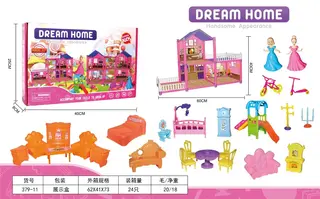
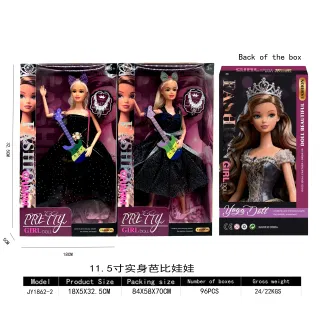
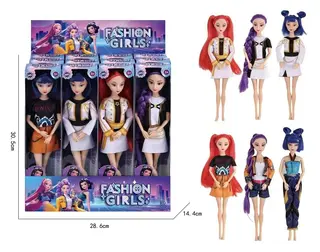
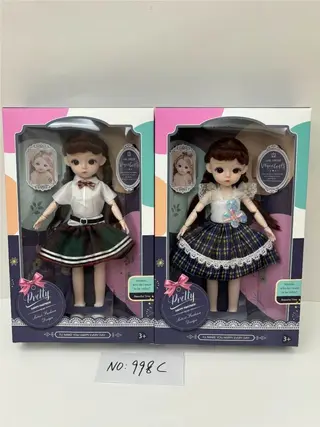
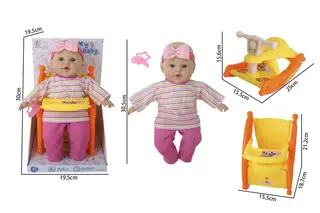
| Dolls | 333 l | 21.0 kg | 55.5 kg | 2.64 |
| Plush & soft toys | 262 l | 18.0 kg | 43.7 kg | 2.43 |
| Role play sets | 289 l | 20.0 kg | 48.1 kg | 2.41 |
| Radio-controlled | 251 l | 19.0 kg | 41.8 kg | 2.20 |
| Bath toys | 221 l | 18.0 kg | 36.9 kg | 2.05 |
| Musical toys | 242 l | 20.4 kg | 40.3 kg | 1.98 |
| Blasters | 244 l | 21.0 kg | 40.7 kg | 1.94 |
| Cars & vehicles | 251 l | 22.0 kg | 41.8 kg | 1.90 |
| Figures & heroes | 227 l | 22.0 kg | 37.8 kg | 1.72 |
| Building sets | 179 l | 19.2 kg | 29.8 kg | 1.55 |
| Arts & crafts | 187 l | 23.0 kg | 31.2 kg | 1.36 |
| Board games & puzzles | 148 l | 20.0 kg | 24.6 kg | 1.23 |
| Play structures & playsets | 166 l | 23.0 kg | 27.7 kg | 1.20 |
| Kids’ room decor | 139 l | 19.0 kg | 23.2 kg | 1.22 |
| Keychains & charms | 153 l | 21.5 kg | 25.5 kg | 1.19 |
Read the third column first. Every carton in this table weighs between 16 and 23 kg — the scale barely distinguishes a doll carton from a puzzle carton. Now read the fourth. The invoice distinguishes them by a factor of more than two.
The reason
The rule looks arbitrary until you think about what the carrier is actually selling.
An aircraft or a container has two limits: how much it can lift and how much it can hold. Dense cargo like machine parts exhausts the lift first. Light bulky cargo like toys exhausts the space first — the hold is full while the aircraft is nowhere near its weight limit. If carriers priced only by weight, a plane full of plush would fly for almost nothing and could not pay for the flight.
So they invented a conversion. Length times width times height in centimetres, divided by 6,000 for air, gives a number in kilograms; you are charged on that or on the real weight, whichever is larger. Sea freight applies a gentler version of the same idea — which is exactly why bulky toys belong on ships.
There is nothing to negotiate here. The only variable you control is what goes in the box.
The choice
Air, 1–15 days. For goods that must arrive by a date. Roughly three times the cost of rail, and it punishes volume hardest — which is why the table above matters most here.
Rail, 12–25 days. Available for 29 of the 62 destinations in our transit table, because it needs continuous track from China. Where it exists it sits neatly between air and sea on both time and price, and for European buyers it is often the right answer.
Road. The primary method for the EAEU.
Sea, 2–45 days. 18–40 to the United States, 22–38 to Europe. The cheapest and the slowest, and the honest mode for anything in the upper half of the table. Transit ranges for the 62 destinations are published on our shipping page.
Practical
What moves the bill. First, what is in the box — the table above is a two-fold spread and nothing else you do comes close. Second, the mode, chosen after that arithmetic rather than before. Third, the season: freight prices rise ahead of Chinese New Year, which falls on 6 February 2027, because everybody ships at once before the factories stop.
What does not. The number of different models in the order — freight is charged on the consignment, so twenty models at one carton each cost the same as twenty cartons of one model of similar bulk. And haggling over the per-kilo rate, which moves a few per cent while the volumetric multiple moves a hundred and ninety.
The practical order of operations: pick the goods, look up the multiple, then choose the mode. Doing it the other way round is how a cheap order becomes an expensive one. Our calculator takes the carton dimensions printed on every product card.
About us
OPTTOYSCHINA is a wholesale platform operated by OPTTOYSCHINA LLP, Kazakhstan: catalog, requests and product selection. The seller — invoice, payment, export, documents and claims — is our manufacturing partner Yifeng Group, China. The catalogue holds 385,341 items from 5,233 factories, with the price published per piece and per carton, the carton quantity and the box dimensions stated, and the maker named on every card. The minimum is one factory carton of one model; minimum order total 2,000 CNY (≈ $313).
Our manufacturing partner is Yifeng Group (艺丰集团) in Chenghai, Shantou. The group has worked in Chenghai since 1992; its first plant, Shifeng Culture Development Co., Ltd, dates from that year and runs more than 35,000 m² of production area with an annual output of USD 60 M. AJT Testing Services Limited, founded in 2007, is historically linked with the group’s founding family and works in the same Chenghai ecosystem; the group keeps a permanent 15,000 m² showroom in Shantou with more than 500,000 toy samples. See our factory partner page.
Every batch is checked line by line with photo and video before the cartons are taped, and transit ranges are published for 62 destinations.
Honestly
It is not a price. We publish multiples, not rates. A per-kilo figure depends on the lane, the carrier and the week, and a wrong one becomes the foundation of your landed-cost calculation rather than a detail in it.
It is medians, not your carton. Half the cartons in each category are bulkier than the figure shown and half are tighter. The dimensions of the specific item you are buying are on its card, and the calculator uses those.
And the divisor varies. 6,000 is the common air-freight convention and the one we used throughout; some carriers and some sea calculations use different numbers. The shape of the table does not change — the ratios between categories stay where they are — but the absolute kilograms shift with the divisor your carrier applies.









































Counts are pulled live from the catalogue on every page load — not a fixed figure typed in by hand.
FAQ
More wholesale pages
Tell us what you need and we come back with a quote — contact us →