
P16985503859576671
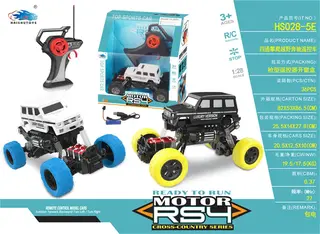
Shantou Toy Factory
Inside the Chenghai toy cluster — who owns the moulds, how factories differ, and how to buy one carton instead of one container.
Open prices per unit and per carton. No registration, no sales rep, minimum order total 2,000 CNY (≈ $313), no company required — you can buy as an individual. Both prices — per unit and per carton — are open before you order.
Chenghai is not a city and not a business park. It is a district of Shantou, in eastern Guangdong, roughly 350 kilometres up the coast from Hong Kong, where plastic toy manufacturing has concentrated for four decades until entire streets specialise in a single component. One street injection-moulds car bodies. The next one over does nothing but decals and paint masks. A third does gearboxes for radio-controlled models and sells them to eighty different brands that all look like competitors on a shelf in Almaty or Warsaw.
This page describes how that cluster is actually organised, why the classic advice to "find a factory in Chenghai" solves almost nothing on its own, and what changes when 5,233 of those factories sit behind one catalogue.
The cluster
Three very different kinds of company in Chenghai will all introduce themselves as a factory, and the difference decides your price, your minimum and your risk.
The mould owner. This is the real thing: a company that paid for the steel tooling, runs the injection machines and owns the design. A single mould for a mid-size die-cast car costs a serious amount of money and takes weeks to cut, so the owner protects it — the mould is the business, not the toy. Mould owners have the lowest unit cost and the least flexibility. They think in production runs of tens of thousands, because a run is what pays the machine time back. Ask a mould owner for two hundred pieces and you are asking them to stop a line.
The assembler. Buys mouldings, motors, batteries, boards, fabric and boxes from the specialised streets around it and puts them together. No steel of its own. This is the most numerous category in Chenghai, the most flexible on quantity, and the one where quality varies most, because the assembler chooses which grade of component to buy. Two assemblers can ship a visually identical remote-control car with a completely different gearbox inside it.
The trading company. Owns nothing, makes nothing, speaks English, answers within an hour and quotes on everything. Useful, and not automatically a problem — but you are paying a margin for a translation layer, and you are one step further away from the person who can actually answer why the paint on the second batch is a slightly different red.
None of these three is the right answer for every order. The mould owner is right when you already know the model sells and you want a container of it. The assembler is right when you are building an assortment. What almost never works is the thing most first-time importers try: writing to twenty companies from all three categories at once, comparing prices that were never comparable, and picking the lowest.
Buying what these factories already make is one road; putting your own brand or your own mould into the same production group is another, and it is written up on custom toy manufacturing in China.
Live numbers
These eight categories are where the Shantou and Chenghai cluster dominates, with counts pulled from our catalogue rather than from a brochure:
| Category | Items |
|---|---|
| Cars & Vehicles | 52,802 |
| Toy Weapons & Blasters | 34,807 |
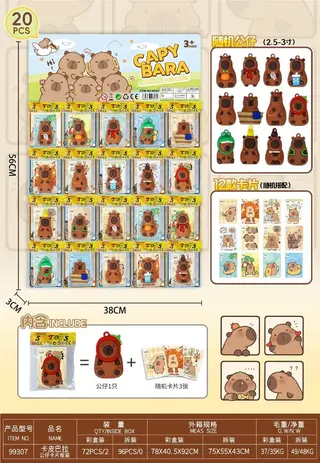
| Action Figures & Characters | 32,765 |
| Building Sets & Blocks | 29,238 |
| RC & Powered Vehicles | 28,008 |
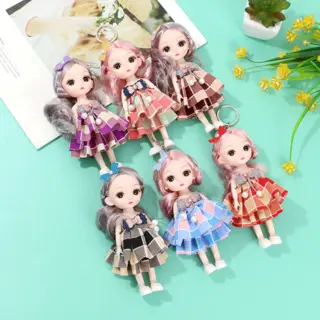
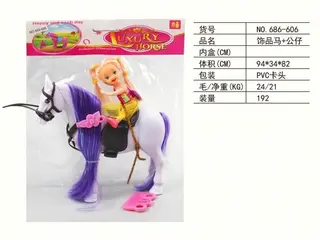
| Dolls & Baby Dolls | 27,943 |
| Role-Play Sets | 26,278 |
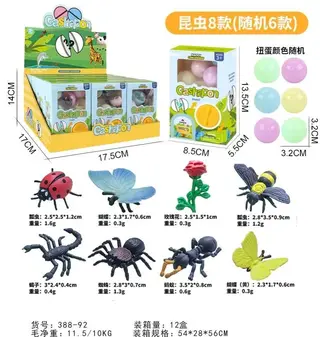
| Fidget, Squishy & Gag Toys | 17,361 |
Together that is over 249,000 items, out of 385,341 in the catalogue as a whole, across 38 categories and 267 subcategories. Nearly all of it comes out of Shantou and Chenghai, and the concentration is not an accident of our sourcing — it reflects where these product types are actually made.
The pattern inside those numbers is worth reading. Cars, blasters and RC are plastic-and-motor products with heavy tooling and light assembly: classic mould owner territory, and the reason Chenghai exists. Role-play sets and fidget toys sit at the other end — low tooling cost, fast turnover, driven by whatever went viral last quarter, and dominated by assemblers who can switch product in weeks. If you are testing a new shelf, the second group tells you about demand faster; the first group is what you commit to once you know.
Minimums
A Chenghai factory quoting a container is not being greedy. It is describing its actual cost structure, and the arithmetic is worth understanding before you argue with it.
A production run has a fixed cost that does not shrink with your order: setting up the machine, changing the mould, mixing the colour batch, running the first pieces to waste until the shot stabilises, printing the boxes. Split across 30,000 units that cost disappears into the noise. Split across 300 units it is larger than the toy. The factory is not refusing small orders out of arrogance; below a certain quantity a small order genuinely costs the factory money to accept.
There is a second cost most buyers never see: the factory's own working capital. It buys resin, motors and packaging before it gets paid. A small order ties up the same paperwork, the same quality check and the same shipping desk as a large one, at a fraction of the revenue.
Aggregation is the only honest way around this. We buy at run scale across many buyers and hold the goods, so the factory sees the quantity it needs and you see the quantity you need. The minimum you commit to is one carton per model — the factory's own carton, not a repacked one — and the minimum order total is 2,000 CNY (≈ $313) on top of it. The exact number of pieces in a carton is printed on every product page before you order, because it varies from a dozen for a large RC truck to several hundred for small figures.
How the minimum works in detail, including what happens inside an assorted carton, is on the minimum order page.
Quality
The most expensive lesson in Chenghai buying is that the picture does not describe the product. Two assemblers a kilometre apart will sell you the same photographed remote-control car, and the difference lives in places a photo cannot show.
The motor and gearbox. Same body, different drivetrain. One uses a brushed motor with nylon gears rated for the load, the other uses a cheaper motor with gears that strip on the first curb. Both cars drive perfectly across a showroom floor.
The battery compartment. A screwed compartment with a proper lid is a different product, legally and practically, from a friction-fit one. In most export markets a toy for young children must not give access to button cells without a tool. This single detail moves a product from sellable to seizable.
The plastic itself. Virgin resin against recycled regrind. Regrind is cheaper, slightly duller, and more brittle at the stress points — the axle mount, the clip, the hinge. It survives the shelf and fails in the third week of use.
The paint and print. Pad printing against stickers. Stickers are cheaper and peel. On a shelf, at the moment of purchase, they look nearly the same.
We cannot inspect every one of 385,341 items, and claiming otherwise would be dishonest. What we do is keep the supplier attached to the item in our own system, so a repeated defect points at a specific factory rather than at a category, and so a product that keeps generating claims stops being reordered.
On the ground
Our office is in Shantou. That sentence appears on a lot of websites, so here is the concrete version of what it changes and what it does not.
It changes the response time on a physical question. When a buyer asks whether the hinge on a specific doll case is glued or moulded, the answer comes from somebody who can hold one, usually the same day, rather than from a supplier email that says "yes, good quality" in six hours.
It changes what happens when a carton is wrong. A wrong-item or transit-damage claim in China is resolved with the factory in person, in Chinese, on their premises. This is the single biggest reason claim resolution times differ between suppliers.
It changes consolidation. Goods from twenty factories in three cities arrive at one warehouse, get checked against the order line by line, and go out as one shipment. Without that step, a twenty-supplier order is twenty separate freight problems.
It does not make us the manufacturer, and we do not describe ourselves as one. We are the layer between 5,233 factories and a buyer who needs eleven cartons rather than one container. Where a factory-supplied certificate exists for an item, it is shown on the product page as the factory issued it; where it does not exist, the page does not pretend otherwise.
The certification picture across the catalogue, including which standards cover how many items, is on the documents and customs page.
Pricing
The same toy will be quoted to you at three different prices by three companies in the same district, and none of them is lying. They are quoting different things.
The ex-works price is the toy standing on the factory floor in its carton. Nothing else is in it — no inland transport, no export paperwork, no consolidation, no international freight. This is the number that circulates in screenshots and the number that makes every other quote look expensive.
The delivered-in-China price adds moving the goods from the factory to a warehouse. In Chenghai that is often a short trip, but across a twenty-supplier order it is twenty short trips, and somebody pays for each of them.
The landed price adds export documentation, international freight, and duty and tax in the destination country. This is the only number that tells you whether the toy makes money on your shelf, and it is the number most first-time importers never calculate until the invoice arrives.
Two habits protect you here. The first is to never compare a quote until you know which of the three it is — the difference between an ex-works and a landed price on a light bulky toy can be larger than the toy. The second is to check what currency conversion is being applied and when. On our side, domestic logistics inside China is not billed separately, freight is billed after the shipment is physically weighed rather than estimated, and the exchange rate is the People's Bank of China reference rate plus 5 %, published rather than negotiated per order.
The payment stages, the fee split on transfers and the rate formula are set out on pricing and payment.
2026
Chenghai in 2026 is not the Chenghai of ten years ago, and a few of the changes directly affect what a small buyer can get.
Labour cost rose and automation followed. Injection and assembly that used to be manual are increasingly machine-fed. The practical effect for a buyer is better consistency between units within a run, and slightly less willingness to run tiny quantities, because the setup is now a bigger share of the cost.
Quality expectations rose from the export side. EN71 and ASTM testing that used to be exceptional on mid-market goods is now routine on anything aimed at Europe or North America. That is visible in our own catalogue: 44,336 items carry at least one factory-supplied test certificate on file.
The cluster got faster and shallower on trend goods. Fidget and gag toys move from a video to a shelf in weeks. That is an opportunity if you can order small and fast, and a trap if your minimum forces you to commit to a quantity that outlives the trend.
Nothing changed about the container logic. Factories still price around runs, and a small buyer still cannot get run pricing alone. The aggregation layer is not a temporary inefficiency waiting to be disrupted — it is what makes carton-scale buying arithmetically possible at all.
Honest limits
An honest cluster description has to include the gaps, because buying the wrong category in the wrong place is how margin disappears.
Plush. Chenghai is a plastics cluster. Soft toys are cut, sewn and stuffed, and the skills, the labour and the machinery are different. Plush production sits mostly in Yiwu and in Jiangsu and Shandong workshops. Our plush selection reflects that, and it has its own page.
Wood. Wooden toys need timber supply, drying and dust control. That is another region and another kind of factory entirely.
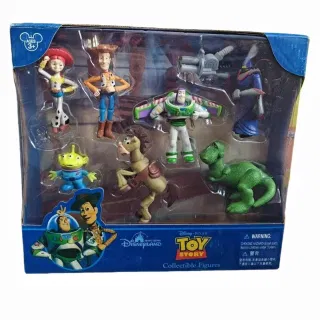
Licensed characters. A licensed product without a licence is a customs problem and a legal problem, and the fact that a factory in Chenghai will happily print the character does not make it legal to import. We do not knowingly list unlicensed licensed-lookalike goods, and where a buyer asks for one, the honest answer is no.
Very large moulded items. Ride-ons, playhouses and slides are volume rather than value — the volumetric weight dwarfs the actual weight. The freight cost per unit is brutal, and the economics usually only work for a full container of a single model.


















FAQ
More wholesale pages
Tell us what you need and we come back with a quote — contact us →