
P17728284551183398

Toy MOQ Explained
The cheapest toy in our catalogue has the most expensive minimum order. Here is why that is not a mistake.
Open prices per unit and per carton. No registration, no sales rep, minimum order total 2,000 CNY (≈ $313), no company required — you can buy as an individual. Both prices — per unit and per carton — are open before you order.
A keychain costs ¥3.35. A ride-on car costs ¥49.00 — nearly fifteen times more. So the smallest order you can place on keychains is cheaper, obviously.
It is not. One carton of keychains costs about ¥2,010. One carton of ride-ons costs about ¥392. The cheap toy has a minimum order five times larger than the expensive one, and once you see why, the whole idea of «MOQ» stops being a number a supplier invented and becomes a fact about boxes.
Ask two Chinese companies for their MOQ and you can get «3,000 pieces» and «1 carton» for what looks like the same toy. Neither is lying. They are answering about two different stages of the same supply chain — and knowing which one you are being quoted is the difference between a shop that can buy from China and a shop that cannot.
What this article answers:
The distinction
The factory’s MOQ is a production run. The mould has to be mounted, the colour matched, the first pieces run and checked, the line cleared afterwards. That setup costs the same for 100 pieces as for 10,000 — so the factory quotes the quantity that makes it worth doing. Commonly a few thousand pieces of one model, more if new tooling or a resin colour change is involved.
A wholesaler’s MOQ can be a carton, because the setup already happened and the goods already exist. The unit stops being a run and becomes a box.
Both answers are honest. They describe different stages, and the one you are quoted tells you which stage you are talking to.
Measured
These six sizes dominate our catalogue, and the reason is physical rather than commercial: they divide cleanly into shipping cartons and pallets at common toy dimensions.
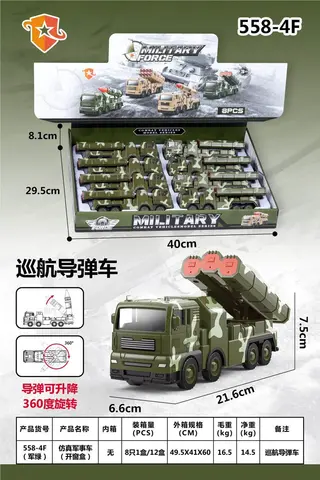
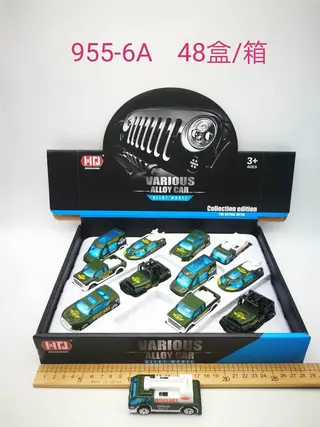
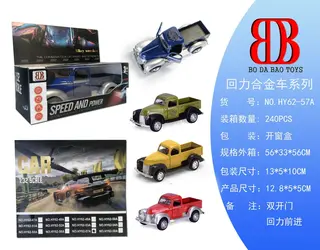
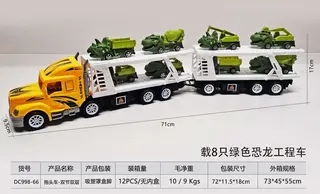
Measured across 385,341 items, the median carton is 84 pieces. Small dense items go higher — keychains and novelty often 240 or 600 to a carton. Large items go far lower: ride-ons can be 8.
The practical consequence: «one carton» is not one number. Check the quantity on the card before assuming the order size, because it moves by a factor of seventy between a keychain and a ride-on.
The surprising part
Here is what one carton actually costs, calculated from our own medians — median price per piece multiplied by median carton quantity for that category:
| Category | Per piece | Per carton | One carton |
|---|---|---|---|
| Keychains | ¥3.35 | 600 pcs | ¥2,010 ≈ $313 |
| Watches | ¥4.59 | 432 pcs | ¥1,983 ≈ $309 |
| Kids’ room decor | ¥12.50 | 120 pcs | ¥1,500 ≈ $233 |
| Plush | ¥13.00 | 100 pcs | ¥1,300 ≈ $202 |
| Halloween | ¥3.65 | 300 pcs | ¥1,095 ≈ $170 |
| Beach & pool | ¥8.20 | 48 pcs | ¥394 ≈ $61 |
| Ride-on vehicles | ¥49.00 | 8 pcs | ¥392 ≈ $61 |
| Balloons | ¥2.45 | 100 pcs | ¥245 ≈ $38 |
| Stationery | ¥2.80 | 60 pcs | ¥168 ≈ $26 |
| Flags & fan gear | ¥1.35 | 48 pcs | ¥65 ≈ $10 |
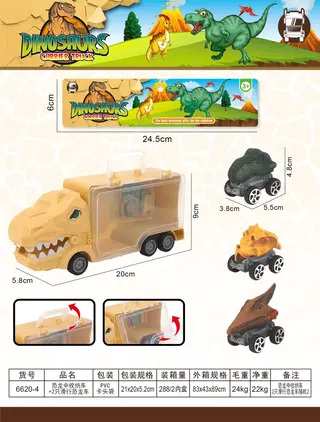
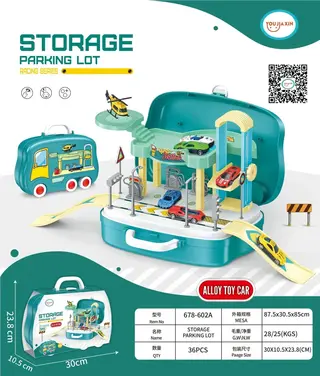
Read the last column, not the second. A ride-on at ¥49 a piece needs less money to try than a keychain at ¥3.35, because eight ride-ons fill a box and six hundred keychains fill the same box.
So «cheap toy, small minimum» is exactly backwards. The minimum follows the box, and small things come in enormous counts. This is the single most useful thing to know before planning a first order, and almost nobody says it.
The entry price
Across the whole catalogue a median item is ¥9.30 a piece and a median carton is 84 pieces, so a median test carton is about ¥781, roughly $122. The real range, as the table above shows, runs from about $10 to about $313.
52% of our items are under ¥10 a piece and 92% under ¥50. Twenty median cartons — twenty different models — is under $2,500 of goods.
That number is the point of this article. Most people who have never bought from China assume the entry is tens of thousands, and it is that assumption, rather than any actual barrier, that keeps small shops out.
Watch for
A high money floor. A carton minimum with a $1,000 floor underneath it is the production-run problem in a new hat. Ours is low and stated openly: from 1 carton per item; minimum order total 2,000 CNY (≈ $313). It is worth asking anybody who quotes you a carton what money floor sits underneath it.
The mixed carton. Asking for five of this and ten of that inside one box means someone opens and repacks it by hand — which costs more than it saves and introduces the very errors an inspection exists to catch. We do not break cartons. Variety comes from more models, not from a mixed box.
About us
OPTTOYSCHINA is a wholesale platform operated by OPTTOYSCHINA LLP, Kazakhstan: catalog, requests and product selection. The seller — invoice, payment, export, documents and claims — is our manufacturing partner Yifeng Group, China. The catalogue holds 385,341 items from 5,233 factories, with the price published per piece and per carton, the carton quantity stated and the factory named on every card. 44,336 items carry at least one test certificate on file from the factory; on the rest the field is shown empty.
Our manufacturing partner is Yifeng Group (艺丰集团) in Chenghai, Shantou. The group has worked in Chenghai since 1992; its first plant, Shifeng Culture Development Co., Ltd, dates from that year and runs more than 35,000 m² of production area with an annual output of USD 60 M. AJT Testing Services Limited, founded in 2007 — the first private laboratory in eastern Guangdong to hold the Chinese national CCC accreditation for toy testing — is historically linked with the group’s founding family and works in the same Chenghai ecosystem; the group keeps a permanent 15,000 m² showroom in Shantou with more than 500,000 toy samples. See our factory partner page.
We have offices in Yiwu and Shantou and a consolidation warehouse in Guangzhou. Every batch is checked line by line with photo and video before the cartons are taped, and transit ranges are published for 62 destinations. Every number in this article is measured in our own catalogue — we do not repeat figures we have not counted.
How it works
Every card states the price per piece, the price per carton and the carton quantity, and names the factory. Pick models, we buy from the factories, consolidate goods from several of them into one shipment, inspect the batch in China before it travels, and ship to 72 destinations. No company required, minimum order total 2,000 CNY (≈ $313).










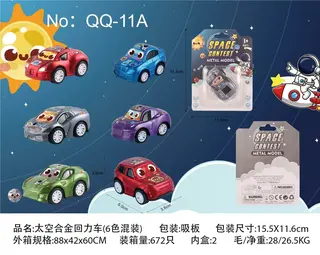
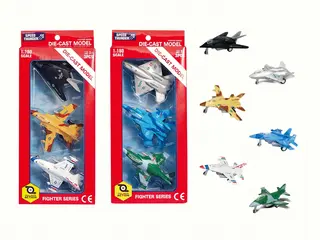


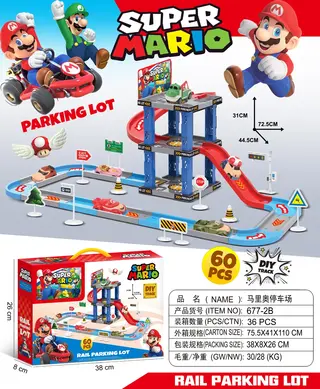
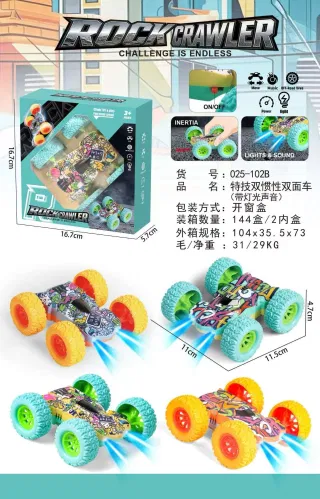





Counts are pulled live from the catalogue on every page load — not a fixed figure typed in by hand.
FAQ
More wholesale pages
Tell us what you need and we come back with a quote — contact us →