
P17653648028961268

Wholesale Plush Toys
9,278 wholesale plush toys and stuffed animals, one-carton minimum — and why a soft toy is the cheapest to buy and the most expensive to ship.
Open prices per unit and per carton. No registration, no sales rep, minimum order total 2,000 CNY (≈ $313), no company required — you can buy as an individual. Both prices — per unit and per carton — are open before you order.
A carton of plush and a carton of building blocks can be the same box and the same price to buy, and cost three times as much apart to deliver. Nothing about the toy explains it. The explanation is that a soft toy is mostly air, and every carrier on earth bills air.
That single fact decides more about whether a plush line makes money than the purchase price does, and it is the reason this page spends as much time on cardboard as on fabric. The rest of it is about what actually differs between two plush toys that photograph identically: the pile, the fill, the seams, the eyes, and the four labels that decide whether the shipment clears customs.
The range
Counts are pulled live from the catalogue, not written into the page:
| Subcategory | Items |
|---|---|
| Animals & Creatures | 5,791 |
| General Plush | 2,005 |
| Characters & Anime | 1,384 |
| Interactive Plush | 11 |
| Not yet sorted into a subcategory | 87 |
The catalogue as a whole holds 385,341 items across 38 categories and 267 subcategories, and the plush counter on this page reads 9,278.
Two things are worth saying plainly about that table. The first is that Interactive Plush — soft toys with sound, movement or electronics inside — is genuinely tiny at 11 items. That is not a display error and we are not going to dress it up: interactive plush carries battery, sound-level and small-parts requirements that most soft-toy workshops are not set up to certify, so the supply that reaches a catalogue like ours is thin. If interactive plush is your category, we are currently not the right source for it.
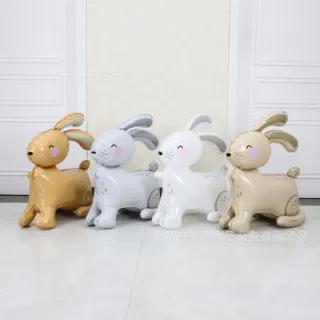
The second is that Animals & Creatures at 5,791 items is where the real depth is, and it is also the least trend-dependent part of the shelf. A bear, a rabbit and a dog sell every year. A character plush sells for as long as the character does.
Volumetric weight
Carriers charge the greater of two numbers: what the box weighs, and what the box would weigh if it were full of something ordinary. The second number is called volumetric weight, and for air and most consolidated freight it is calculated as length × width × height in centimetres, divided by 6,000.
Take a standard 60 × 40 × 40 cm carton. That is 96,000 cubic centimetres, so its volumetric weight is 16 kg. Fill it with building blocks and it weighs about 22 kg — you are billed 22, the honest number. Fill the same carton with plush and it weighs about 6 kg — but you are billed 16, because the box occupies the space of 16 kg regardless of what is inside it.
The threshold to remember is roughly 167 kg per cubic metre. Anything less dense than that ships as volume. Plush is nowhere near it.
There are three practical consequences, and they are the entire economics of a soft-toy line:
Compression is money. A vacuum-compressed or tightly-packed plush carton is not a packaging detail, it is a discount. The same 200 toys in a carton 20 % smaller cost 20 % less to move.
Mixing beats sorting. A container of nothing but plush pays volumetric on every box. A mixed load — plush riding with die-cast, blocks or anything dense — averages the density out, and the dense goods effectively carry the light ones. This is the single most useful thing a small importer can do about freight cost, and it costs nothing to do.
The 100 kg floor cuts both ways. Freight is billed on a minimum of 100 kg chargeable weight. For plush that floor arrives fast in volume and slowly in actual weight, which means a plush-only order can hit the minimum while the boxes still look half empty.
The full formula, a worked example and the mixing arithmetic are on the volumetric weight page.
Quality
The pile. Short-pile plush photographs crisply and hides nothing; long-pile photographs soft and hides a great deal, including seams and uneven stuffing. A long-pile toy that looks luxurious in a photo can be noticeably thin in the hand.
The fill. Polyester fibre fill comes in grades, and the grade decides whether the toy holds its shape after a child squeezes it two hundred times. Cheap fill migrates — it moves away from the pressure point and leaves the toy lumpy, most visibly at the neck and the base. You cannot see this in a photograph. You can see it in the third week.
The fill ratio. Two toys of the same pattern with different amounts of fill are different products. Underfilled plush is lighter, cheaper to make, cheaper to ship, and feels wrong immediately.
The seams. Locked seams against simple straight stitching. On a toy that gets pulled by one arm every day, the seam is the failure point, and reinforcement at the limb joins is the difference between a return and a repeat purchase.
The eyes and nose. Safety eyes with a locking washer against glued-on components. This is not a quality preference, it is a small-parts and choking question, and it is the single item most likely to fail a market inspection.
The label. Composition, fill content, age marking, manufacturer identity. Four pieces of information, sewn in, in the language the destination market requires. A missing label is a customs conversation, not a cosmetic issue.
Certification
Plush is inspected differently from plastic, because the failure modes are different. Inspectors on soft toys look first at attachment strength on eyes, noses and any sewn-on accessory, then at seam strength, then at fill migration and flammability, then at labelling.
Across the whole catalogue 44,336 items carry at least one factory-supplied test certificate on file. The breakdown by standard:
| Standard | Items |
|---|---|
| REACH | 33,088 |
| EN71 | 36,137 |
| CPSIA | 25,955 |
| ASTM F963 | 24,034 |
| CE | 20,175 |
| CPC | 20,465 |
| UKCA | 7,907 |
| RoHS | 4,241 |
For plush specifically, EN71 (parts 1, 2 and 3 — mechanical, flammability and chemical) and ASTM F963 are the two that matter most, with REACH covering the chemical content of the fabric and the dyes. RoHS is largely irrelevant to a toy with no electronics in it, which is why the number is low and why it being low is not a problem.
The honest part: a certificate belongs to a product, not to a factory and not to a catalogue. Where a plush item on our site has documents, the page shows the documents the factory supplied. Where it has none, the page shows none. If you need a specific standard for a specific model and the page does not show it, ask — we will go to the factory, and the answer will be either the document or a straight no.
Measurements
Plush sizing is the least standardised measurement in the toy trade, and the disagreement is structural rather than dishonest.
A size can be measured lying flat or sitting up; with ears or to the top of the head; along the body or point to point. The same rabbit is legitimately 30 cm and 45 cm depending on which convention the workshop uses. Chinese factories most often quote the flat, ear-to-toe measurement, which is the largest of the available numbers.
Two practical rules follow. First, compare sizes only within one supplier, never across a marketplace where each listing uses its own convention. Second, when the size genuinely matters — a gift set, a display, a shelf with a fixed height — ask for the sitting height specifically, and ask before the order rather than after.
Carton quantities move inversely and sharply: a 20 cm plush might pack a hundred or more to a carton, a 60 cm one a dozen. The piece count per carton is printed on every product page before you order, along with both prices — per unit and per carton.
Terminology
Soft-toy quotes come back full of shorthand that means something precise to the workshop and nothing at all to a first-time buyer. The four terms below cover most of what you will see.
PP cotton. Not cotton. Polypropylene or polyester fibre fill, the standard stuffing for almost all modern plush. Comes in grades that differ in springiness and in how well they resist migration under repeated squeezing. When a factory says "PP cotton" without a grade, ask for the grade.
Short plush, super soft, velboa, minky. Pile types, roughly in order of how long and how soft the surface is. Velboa is short and dense and holds detail; minky is long, very soft and forgiving of imperfect seams. A design that depends on a printed face works in velboa and blurs in minky.
Bean bag or PP pellets. Weighted fill in the base so the toy sits. Pellets are small plastic granules, and they are a small-parts question if the seam that holds them ever opens — which is why the base seam on a weighted toy deserves more attention than any other stitch on the product.
Embroidered versus printed features. Embroidered eyes and mouths are sewn and cannot detach; printed ones are cheaper and can fade or crack. For toys aimed at the youngest age group, embroidered is not a style choice, it is the safe construction.
Knowing these four terms changes the conversation with a supplier from "is it good quality" — a question with no answer — to "which grade, which pile, embroidered or printed", which has answers you can compare.
Logistics
Packing is where a claim is won or lost, so it is worth knowing what a correctly packed plush carton looks like before one arrives.
Inside a factory carton, plush is normally bagged individually in clear polybags with a printed suffocation warning, then packed compressed. The polybag is not presentation — it is what keeps the toy clean and dry through a warehouse, a truck and a container, and it is what lets you photograph an intact item next to a damaged one if part of a carton goes wrong.
The carton itself is corrugated board with the model number and the piece count printed on it. That printed count is the reference for a shortage claim. A repacked carton has no printed count, no factory seal and no traceable origin, which is precisely why we do not open and repack factory cartons: doing it once destroys the evidence chain for every claim on that shipment.
Damp is the specific enemy of plush. A carton that got wet in transit may look acceptable and smell wrong, and mould develops after the freight is long gone. If a carton arrives with staining, a soft or bulging wall, or any smell at all, photograph the outside before you open it, keep the unboxing video running continuously, and do not unpack the rest of the shipment into the same room. That sequence — outside first, continuous video, no interruption — is what turns a complaint into a provable claim.
The line
Every plush buyer eventually gets offered a character they recognise at a price that makes no sense. The price makes no sense because the licence has not been paid for.
An unlicensed character toy is not a grey area. It is seizable at the border, it is a legal exposure for the importer whose name is on the customs declaration, and the fact that a workshop in China will make it changes none of that. The risk sits with the person who imports it, not with the person who sewed it.
We do not knowingly list unlicensed lookalikes of protected characters. Our Characters & Anime subcategory holds 1,384 items and consists of original designs and of properties where the factory holds or claims rights it can document. When a buyer asks us for a specific protected character at a price only an unlicensed copy could reach, the answer is no, and it stays no.
Worked example
A worked example, so the abstraction has a shape.
A carton of mid-size animal plush — say 25 to 30 cm, packed compressed — commonly holds between 40 and 80 pieces, weighs 5 to 8 kg actual, and is billed at around 16 kg volumetric in a standard 60 × 40 × 40 box. At that ratio, freight is carrying roughly ten kilos of nothing.
Now put that carton in a shipment with four cartons of die-cast vehicles at 20 kg actual each. The load is five boxes, five times 16 kg volumetric equals 80 kg volumetric against 86 kg actual — and the whole shipment is billed on actual weight, because the dense goods pushed the average over the threshold. The plush effectively shipped free of its volume penalty.
That is the entire trick, and it is why the useful first plush order is almost never a plush-only order. It is also why the 100 kg minimum, which looks like an obstacle, is usually the thing that decides your assortment for the better.
Transit times, routes and the road rates by region are on shipping and transit times. What you pay for the goods themselves, and how the exchange rate is calculated, is on pricing and payment.
















FAQ
More wholesale pages
Tell us what you need and we come back with a quote — contact us →