
928630525
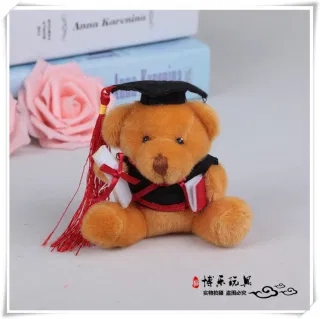
Bear Plush Pendant
0.61 USD/ pc
WHOLESALE FROM CHINA · DELIVERY TO TEL AVIV
Source toys from Chinese factories for your business in Tel Aviv. Mix catalogue items in one order from 2,000 CNY, with full factory cartons per item. The seller is Yifeng Group in China. For your own brand, request custom manufacturing.
THIS IS ONLY PART OF THE CATALOGUE
Categories, filters by age and minimum batch, photo search and AI search.
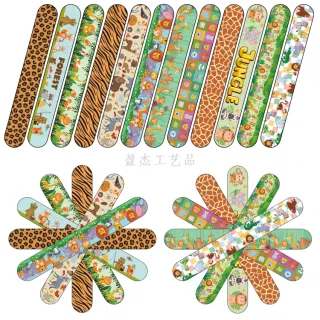


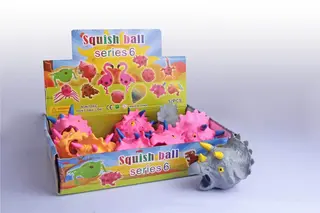


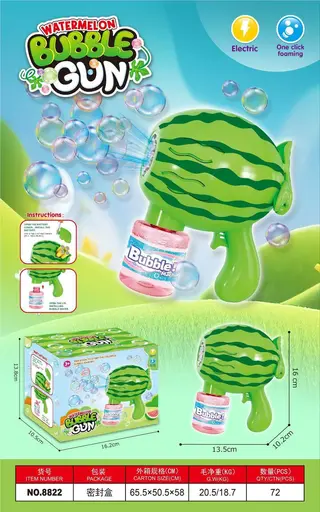
Indicative prices recorded on 22 October 2026. Final prices and availability are confirmed in your quotation. Freight, taxes and conformity costs are quoted separately.
A card shows what the factory makes, not a cleared import. Import requirements are checked for each selected model before the order is confirmed: for an electrically powered toy — the power source and the applicable safety requirements; for a remote-controlled model — the control technology, and if it uses radio, the radio specifications and the applicable communications requirements.
Choose children’s toys for a shop in a Tel Aviv mall, a wholesale business, an online store on an Israeli marketplace, or for distribution across Israel, from the catalogue of Chenghai (Shantou) and Yiwu factories. Each product card shows the price per piece and per carton, the pieces per carton and the manufacturer. Build an order from different items from 2,000 CNY in total; each item in full factory cartons. For a large quantity of one model, send the item number and the order quantity — the seller’s team in China confirms the production run, lead time and price.
The 2,000 CNY minimum applies to the value of the goods. Delivery, customs clearance, taxes and the documents required are calculated separately. The quotation shows what the costs consist of and the total for the agreed scope of supply, line by line, so you can see the landed cost per piece before you commit.
UNDER YOUR BRAND
A full technical brief is not needed for the first request.
For a first quote send: a photo, a drawing, a link to the catalogue item or a description; the order quantity; your logo file and where it should go; what you need from the packaging; the changes you need; whether you already have your own mould; and the delivery address in Tel Aviv. Mould data and project files — if you have them.
Indicative quantities start from 1,000 units per model. The minimum order for your product is confirmed after the factory reviews the specifications.
Sample. A paid sample is made within 7 days when the required mould is ready. For a new product or a modified mould, the sample timing is set after the technical review. The production run starts after you approve the sample. Sample production and shipping are quoted separately. Whether a sample qualifies for any customs relief in Israel is checked against the applicable customs requirements before dispatch; it is not automatic. Any applicable clearance charges are confirmed separately.
Timing. Production of a confirmed run — 5–25 days depending on the order quantity. Development of a new model, changes to a model and mould making come before the run and are scheduled after the review.
Documents for a private-label run. Before the run starts we assess how changes to the brand, the packaging, the materials, the construction, the size or the function affect safety, marking and whether the test reports already held still apply. Whether further testing and documents are needed, and how much, follows from that check and is agreed before the order is confirmed.

YIFENG GROUP · 艺丰集团
The group’s factories have made toys since 1992. The Alibaba International toy sourcing centre is located at Yifeng Group in Chenghai, Shantou, according to a notice by the Shantou municipal government.
Showroom address: Yifeng Building, Chenghua Industrial Zone, Chenghai District, Shantou, Guangdong, China (广东省汕头市澄海区澄华工业区艺丰大厦). Visits by appointment.
| Item | Details |
|---|---|
| Sea | The sea transit between the ports confirmed in the quotation is set out there, according to the logistics partner YT. It does not include production, waiting for the sailing, customs clearance or delivery to your address, which are set out separately. Ports of loading: Ningbo, Shanghai, Shenzhen (Yantian), Guangzhou (Nansha) or Qingdao — chosen for your shipment. The transit for your shipment is confirmed in the quotation together with the route and the port of arrival. |
| Air | The air transit according to the logistics partner — where it starts and ends, which stages it covers and the overall schedule — is confirmed in the quotation. Toys with lithium cells may be subject to air freight restrictions; the quotation says so for each such item. |
| Arrival | Israel has two container ports, Haifa and Ashdod, and a carrier can move a call from one to the other at short notice. For that reason the port of arrival is fixed for your shipment in the quotation rather than promised in advance, and the inland leg is quoted from the port that actually applies. Air cargo arrives at Ben Gurion. |
| Before dispatch | Production of the run (5–25 days depending on the order quantity), inspection and consolidation. The place of inspection and consolidation depends on the factories in your order and is confirmed in the quotation. |
| Inside Israel | Customs clearance and delivery from the port to your address are agreed in the quotation. For the last leg send the delivery address or the district and the conditions for taking the goods in — whether there is a loading bay, whether a tail lift is needed, whether a truck of a particular size can reach the entrance and the hours you can receive. The estimated delivery schedule is confirmed in the quotation; a fixed date is not guaranteed. |
| Seasonal peaks | Factories close for about two to four weeks around Chinese New Year, and Golden Week (1–7 October) adds time to production and sailings. In Israel the working week and the holiday calendar differ from the European one, and the dates that fall across your shipment are named in the quotation. Place orders for those peaks early. |
| Cost | Quoted for your order: goods, freight, customs clearance, conformity documents and delivery are listed separately. |
Scope of this section: ordinary commercial import of children’s toys for the Israeli market. Personal import is a different regime with its own allowance and is not described here.
Customs duty and purchase tax. Israel publishes a combined customs and purchase tax tariff, and both follow the tariff line of the item rather than the word “toys”. For tariff item 9503000000/4 — tricycles, scooters, pedal cars and similar wheeled toys, dolls’ carriages, dolls, other toys, scale models and puzzles — the tariff as presented on 23 October 2026 shows the general rate as exemption, in force from 1 June 2023 to 31 May 2028, and purchase tax as exemption in force from 25 January 2018. Two distinctions matter here. The first is that this is the general rate, the one that applies without any trade agreement: it is not a preference that has to be claimed with an origin document, so for goods correctly classified in this item the question of which country they come from does not decide the duty. The second is that the exemption belongs to the item, not to the word “toys”: a product that classifies elsewhere — a toy gun that copies a real firearm, a motorised quad-type vehicle, goods in the games or festive-article headings — is a different line with its own regime. We classify every line of your order before quoting and do not promise the exemption to a particular item before its classification is settled. The general exemption also carries an end date, so it is re-checked against the tariff at the time of the quotation.
What the tax is charged on, and on what assumptions. The customs value is the starting point: the State’s importer guide builds it from the price of the goods plus the carriage and the costs to the destination — for an air shipment it names the CIP price, purchase price plus carriage and costs in the country of origin plus the air leg to the destination airport — with wharfage fees added. The guide’s worked example then calculates the duty on that customs value and the value added tax on the customs value plus the duty actually paid. That example rests on two assumptions: it is an example for a line that carries a positive duty rate, and it shows no purchase tax and no other compulsory import payment. For goods in the main toy item above, where both the duty and the purchase tax are exemption, neither of those two is added and the tax falls on the customs value itself — a statement about those two payments, not a promise that nothing else can apply to a particular shipment. The figures in a quotation follow from the classification of each line and from the payments that actually apply to it. Where a line does carry a duty, a purchase tax or another compulsory payment, those enter the calculation before the tax — your customs broker computes the declaration, and we quote the goods, the freight and the services separately so you can see what enters it.
Value added tax at 18%. The rate on a transaction in Israel and on the import of goods was raised from 17% to 18% with effect from 1 January 2025; the order was published in February 2024 and approved by the Knesset plenum. On importation the tax is paid on release from customs. The rate applied is the one in force on that day. Position as at 24 October 2026.
Toy safety: the standard, the condition and the route. Three different things, and keeping them apart is what makes the subject usable.
The standard. SI 562 is the Israeli toy safety standard and it is an official standard: it is a legal obligation to import, export and market only toys that meet its requirements, and it applies to toys for children under the age of 14. It is a series, and the part that bears on an item follows from what the item is — part 1 for mechanical and physical properties, part 2 for flammability, part 3 for the migration of certain elements, part 7 for finger paints, part 8 for activity toys for domestic use, part 14 for domestic trampolines. The State’s published list of standards approved for the international route carries, for each part, the edition in force, the date it took effect and the evidence the route accepts — for most parts the matching EN 71 part, with an added phthalate test for parts 1 and 14 and the EN 62115 report for toys with an electric power source. Editions move: part 3, for example, shows a 2022 edition and a 2026 edition with overlapping validity, so the edition that applies to your item is read from the list at the time of the order rather than assumed.
The condition at the border. The technical requirements for import sit in the Free Import Order, whose Second Schedule lists the customs items subject to mandatory standardisation and, against each, the conditions for release. Against the toy item the Order shows a row per sub-category: a toy “intended for children” against SI 562; a toy fed from the mains against SI 900 / SI 62368; a children’s tricycle against SI 1888 / SI 562; children’s jewellery against SI 6558; a baby’s pacifier holder against SI 12586; a toy with a wireless remote-control component against SI 562 and, on a row of its own, a Ministry of Communications spectrum approval; and, in the First Schedule, bows and outdoor games that shoot arrows, needing an import licence from the Ministry of Economy. What the table does not settle. The rows name the standards that appear against each sub-category; they do not themselves establish which of them applies to a particular model. The “relation of conditions” column speaks to the approvals and licences listed in a row, not to the technical scope of the standards, and we do not read it as a free choice between standards or as an explanation of the slash. For children’s tricycles, the tariff table lists SI 1888 / SI 562. The applicable standard or standards are determined by the model’s design, intended use and the scope of the relevant standards. The conformity assessment route is determined separately, taking account of the applicable import requirements and the importer’s eligibility. Two further things do not follow from the table: that every standard listed under this item applies to every toy in it, and that a row rules out a requirement written elsewhere — a row proves the condition written in it, not the absence of other requirements. An import licence for a shooting toy, for instance, does not replace the safety requirements that otherwise apply to it. Which row, which standard and which route bear on your model follows from how it is built and what it is for, and that is settled before the order is confirmed.
The route, and who may use it. The routes in that table are alternatives, but not alternatives everyone may pick. The Ministry’s own guidance gives the rule for reading it: where the Free Import Order shows “approval or declaration of the official standard” against an item, the goods sit in import group 2 or 3 and may be released on the importer’s declaration alone. A testing laboratory becomes compulsory in defined cases — goods in group 1, an importer recorded as in breach of trust, an importer who chooses to present an approval, or an importer who failed to produce a product file when imported goods were inspected. Groups 2 and 3 also carry an obligation that is easy to miss: the importer keeps a product file for the model and must produce it on inspection. Separately, where an official standard does not apply to the goods at all although the tariff item calls for one, the broker uses the dedicated code and the importer holds the document proving it does not apply. Submitting a sample for a model test before buying the shipment remains available and is often sensible for a model new to your range, but it is one option among these, not the only path.
What a CE mark and an EN 71 report do and do not do. A European test report is the right starting point, because the published list names the matching EN 71 part as the evidence the international route accepts. It is still not, by itself, permission to bring the goods in. The report has to be the part the list names, in the edition the list shows, for the model and the manufacturer that actually ship, together with whatever the list adds for that part; and the release still goes through the route open to you, with the declaration and the product file that route requires. A CE mark on the box is not a substitute for any of that. We check what the factory holds, whether its scope covers this model and this manufacturer, and what obtaining anything missing would take — and if something cannot be obtained, we say so before the order is confirmed, not after.
Marking, and the language it is in. For goods marketed to the general public the baseline is Hebrew. The Ministry’s published guidance is explicit on two points that matter for planning: an importer in groups 2 and 3 undertakes the marking in the importer’s declaration, and in those groups an exemption from Hebrew marking is not available — where goods are destined for the Palestinian Authority areas the undertaking is to market only after marking in Arabic instead. Goods may arrive unmarked and be marked in the warehouse before they are marketed; the declaration provides for that case. What has to appear comes from the standard that applies to the item — the standards institution tells buyers to look for the importer’s details and address, the country of manufacture, the warnings about use and the age range the toy is intended for. Three carriers of information should not be confused: the toy itself, the retail pack the customer takes home, and the export carton. The exact wording, the warnings and the age marking for your items, and which of the three carries them, are agreed before the order is confirmed.
An electric power source: the requirement and the document for it. An electrically powered toy has to be safe both as a toy and electrically, and the two may have to be tested together; that much does not depend on the route. What does depend on the route is the document that proves it. Under the international standardisation route the State’s published list names, for part 1 of the toy standard, a test report to EN 62115 for a toy that includes an electric power source — that is the case in which we have the document requirement confirmed. Under the other routes in the table the evidence is the one that route defines: a testing laboratory or the Standards Institution works to the Israeli standard, and the Order’s own electrical rows are written for a toy fed from the mains rather than for every battery toy. We therefore name the route before we name the documents, and we do not carry one route’s document set over to another.
A radio module is checked separately from the toy. Goods with a wireless remote-control component have their own rows against this item, and the two cases there are not the same. For such goods intended for children the Order shows SI 562 and, on a row of its own with its own approving authority, a Ministry of Communications spectrum approval (1301). Spectrum and toy safety are different subjects under different authorities, so one does not stand in for the other. For remote-controlled goods that are not children’s toys, including adult hobby items such as model aircraft and scale model cars, the Order shows the communications approval and no toy standard. The communications side is assessed on the radio link and the toy side on safety, and one does not stand in for the other. So for a model of this kind we ask the factory for the model designation, the type of link — radio, infrared, Bluetooth or Wi-Fi — the frequency band and the test reports that exist, and the quotation states which of the two tracks applies. A catalogue title that says “remote control” does not settle it: the link may be infrared, which raises no spectrum question at all. Until the factory confirms the link we do not describe such an item as cleared for import.
Toys that are not only toys. A toy that copies a real firearm may be classified outside the toy heading altogether — the customs classification guidance has a separate ruling for a pistol resembling a real one, and a motorised vehicle in quad configuration has its own ruling. Toys with lithium cells meet battery requirements and air-freight restrictions. For every such item the quotation states what applies and who arranges it, and we do not treat a card in the catalogue as compliant until its own documents say so.
What the seller does. For each selected item, the quotation states which conformity documents exist, which can be obtained and what obtaining them takes. Any additional testing, marking or registration, their cost and lead times are agreed before the order is confirmed. Where testing is needed, it can be arranged close to the factory; the required tests follow the standard that applies.
Documents that travel with the goods. You receive a commercial invoice for the amount you actually paid, a packing list with weights and carton dimensions, the bill of lading or the air waybill, and the conformity documents provided for by the agreed supply scheme. We do not issue an invoice for a value other than the amount paid: an understated invoice is a risk carried by the importer, because the authority can revalue the shipment and act against the company that declared it. A proof of origin says where the goods were made and is a different document from a preference certificate, which is what a trade agreement requires in order to claim a preferential rate. For the main toy item that distinction does not change the duty, because the general rate there is already exemption — it matters when a line of your order classifies somewhere that does carry a rate.
What the importer does. Your company in Israel is the importer and places the goods on the market. The declaration is filed by your customs broker with the required documents and the applicable track recorded on it, and the duty and the tax are paid on release. Unless your quotation says otherwise, the duty, the value added tax, any testing or approval fees and any port storage are on the importer’s account, and the delivery term is named in the quotation and in the contract.
Sources: Israel Tax Authority — customs tariff item 9503, with the Free Import Order conditions · Ministry of Economy and Industry — import of goods subject to mandatory standards · Standards Institution of Israel — children’s toys and SI 562 · Standards Institution of Israel — guide for the new importer · Ministry of Economy and Industry — guide for the new commercial importer, import taxes and a worked example · Knesset — approval of the order raising VAT to 18% from 1 January 2025.
Who is who. OPTTOYSCHINA is the online storefront of Yifeng Group (艺丰集团) and Chinese toy factories. The seller’s team in China confirms product specifications, prepares the quotation and agrees the supply terms with you; the contract and the invoice carry its full legal details. The logistics partner YT carries out the agreed shipment from Guangzhou. Claims and refunds are handled by the seller.
Payment in two stages. A 30–50% advance after the order is confirmed; the balance before dispatch from the warehouse named in your quotation, which for most orders is the Guangzhou warehouse, once you have received the photo and video report on your cargo. Payment is made in USD directly to the seller, Yifeng Group, in China. Prices shown in a local currency on the site are for reference only, and the display can be switched to yuan, dollars or euros; payment to the seller is in US dollars. The seller’s full details are given in the invoice and the contract, together with the governing law and the procedure for disputes; the contract is provided before you pay the advance.
Inspection before dispatch. Each order is inspected before it is shipped: quantity, item numbers, packaging, appearance and random functional checks; you get the photos and video before dispatch. The balance is paid only after you confirm the report. If the report shows a discrepancy for an item and you do not accept it, the item is replaced or the advance for that item is refunded. The place of inspection and consolidation depends on the factories in your order and is confirmed in the quotation.
Claims after receipt. Photograph or film the goods and the packaging and send the claim through the contacts on this page within 2 days of receipt. The seller replies within 3 business days. The acceptable defect rate is 2% of the batch — counted against the whole batch, not against each item number separately — and defects above it are compensated as agreed by both parties: replacement, refund or a discount on the next order. Refunds are paid within 14 days of the claim decision. Replacement shipping is at the seller’s expense. The three business days are working days in China, where the seller’s office is closed for Chinese New Year and for 1–7 October. Safety of the goods is a separate matter: it is covered by the conformity documents, not by this tolerance.
Yes. Mix catalogue items from different factories in one order from 2,000 CNY, each item in full factory cartons. The sea and air transit to Israel, the clearance and the delivery to your address in Tel Aviv are agreed in the quotation.
By road from the port where the shipment is actually discharged. Israel has two container ports, Haifa and Ashdod, and a carrier can move a call from one to the other at short notice. So the quotation fixes the port of arrival for your shipment and prices the inland leg from the port that actually applies, rather than promising a port in advance. Air cargo arrives at Ben Gurion. For the last leg send the delivery address or the district and the conditions for taking the goods in — whether there is a loading bay, whether a tail lift is needed, whether a truck of a particular size can reach the entrance and the hours you can receive. The sea transit quoted is between the ports confirmed in the quotation; production, waiting for the sailing, customs clearance and delivery to your address are separate and are set out there.
2,000 CNY in total per order. Each item is ordered in full factory cartons; the pieces per carton are shown on the product card. There is no need to order a full container.
The seller on the contract and the invoice is Yifeng Group (艺丰集团) in China. OPTTOYSCHINA is the online storefront of Yifeng Group and Chinese toy factories; the seller’s team in China confirms specifications, prepares the quotation and agrees the supply terms with you. Each product card shows the manufacturer of that item.
For goods correctly classified in the main toy item, 9503000000/4, the published tariff shows <b>exemption from the general customs duty</b>, in force to 31 May 2028, and <b>exemption from purchase tax</b> — as presented on 23 October 2026. That is the general rate, so it does not depend on a trade agreement. The value added tax is separate and does apply: 18% on the import of goods, paid on release and calculated on the customs value. The exemption belongs to that tariff item and not to a whole catalogue, so we classify every line of your order, re-check the tariff when we quote, and show every payment that applies to your shipment on its own line. The dates, the base of the tax and the sources are set out under “Duty, VAT and toy standards” above.
SI 562 is the official Israeli toy safety standard: only toys that meet it may be imported and marketed, for children under 14. Which standards apply to your item is determined by its design, its intended use and the scope of the relevant standards; the conformity assessment route is determined separately, taking account of the applicable import requirements and the importer’s eligibility. A CE mark or a European report is the right starting point but not permission by itself. Before you confirm the order we check what the factory already holds, whether its reports cover this model and this manufacturer, and what obtaining anything missing would take — and the quotation says so for each item. The tariff rows, the parts and editions and the cases where a testing laboratory is compulsory are set out under “Duty, VAT and toy standards” above.
A marketplace adds requirements on top of the import ones, it does not replace them. The goods still have to be released, and the retail pack has to carry what the applicable standard and the marketplace ask for — the importer’s details and address, the country of manufacture, the warnings about use and the age range the toy is intended for. Three things are often confused here and we keep them apart: the toy itself, the retail pack the customer takes home, and the export carton. Each item usually needs its own barcode. Send the marketplace name and the item numbers: the quotation states what we put on the goods and the packaging in China and what your company arranges in Israel.
In USD, directly to the seller, Yifeng Group, in China. Prices shown in a local currency on the site are for reference only; payment in them is not accepted. Your customs declaration in Israel is valued in shekels at the rate used by customs on the day it is registered, which is a separate matter from what you pay the seller. The seller’s full details are given in the invoice and the contract.
No. A 30–50% advance after the order is confirmed; the exact advance is fixed in the quotation. The balance is paid before dispatch, after you receive the photo and video report.
Send the claim through the contacts on this page within 2 days of receipt, with photos or video; the seller replies within 3 business days. The acceptable defect rate is 2% of the batch; defects above it are compensated as agreed: replacement, refund or a discount on the next order. Refunds are paid within 14 days of the decision; replacement shipping is at the seller’s expense.
Yes: your logo and Hebrew packaging on a catalogue model, a modified model, a new product from your design or sample, or production with your own mould after a technical check. Indicative quantities start from 1,000 units per model; the minimum for your product is confirmed after the factory reviews the specifications. Before the run we assess how your changes affect safety, marking and whether the test reports already held still apply; any further testing and documents are agreed before the order is confirmed.
A local wholesaler sells what is already in the country: you see the goods, take small quantities and pay for the work already done to bring them in. Ordering from the factory is the other trade-off — the price is the factory price, the choice is the whole catalogue rather than one warehouse, and you can put your own brand on the goods from 1,000 units of a model. Against that you plan ahead: production, the sailing, release and the inland leg all take time, and the standards condition is settled before the order rather than at the port. If you need goods this week, the local market wins. If price, choice and your own brand matter, the factory does.
Item numbers from the catalogue, quantities and the delivery address in Tel Aviv. For your own product — a link, a photo or a description and the quantity. The team replies during business hours; China is 5–6 hours ahead of Israel, depending on the season.